
“Building a New Way of Learning” is a four-part series on Sam Beauford Woodworking Institute, a premier accredited trade school in Adrian, Michigan, where traditional techniques meet contemporary practice. Through the perspectives of the founder, a student, an instructor, and a weekend learner, this series explores the ways a school can radically transform the community around it.
A productive woodshop is not a quiet place. The table saw whines, the dust collector roars, and heavy hardwood clanks against the floor as the circular saw breaks down rough lumber. But in the bench room at the Sam Beauford Woodworking Institute, the machines fall silent.
Here, students work with hand tools: a plane whispers across wood, a mallet taps a dovetail into place. In the quiet concentration of the room, Zack Fealk listens for something else: the moment a student’s struggle to learn a new technique tips into frustration. He notices the change in pitch as a tool catches against wood, and the quickening breath of an irritated student. He believes students need room to explore and find their own ways of applying what they learn. But sometimes, he says, “it’s time to step in.”
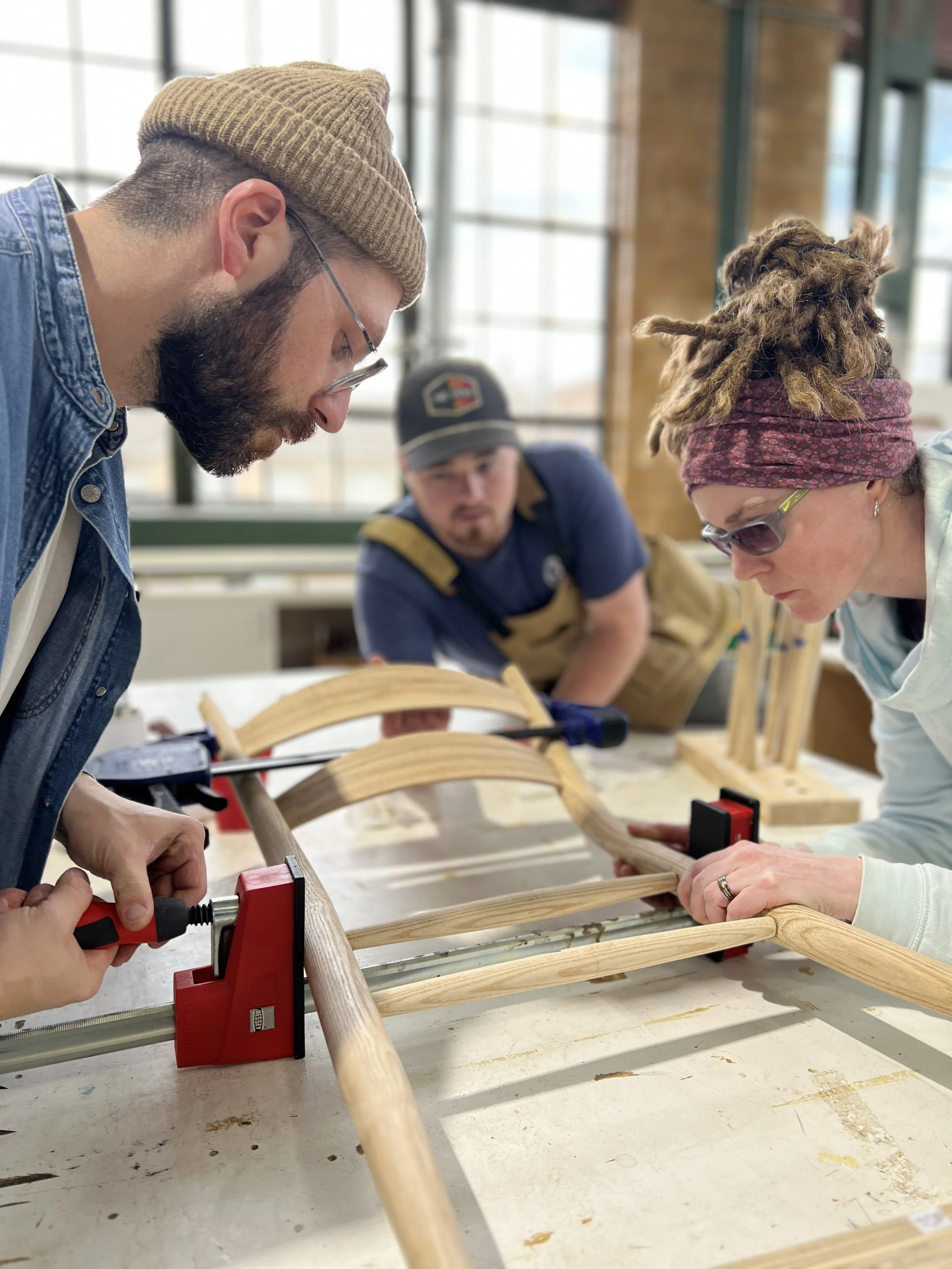
Zack Fealk assists student Jaime Marvin with her ladderback chair assembly
Not long ago, Zack was the one learning a host of new tools. At 25, he was mounting televisions in Portland through the TaskRabbit app, while teaching himself new skills with the help of YouTube. A contractor eventually took him on and taught him home remodeling.
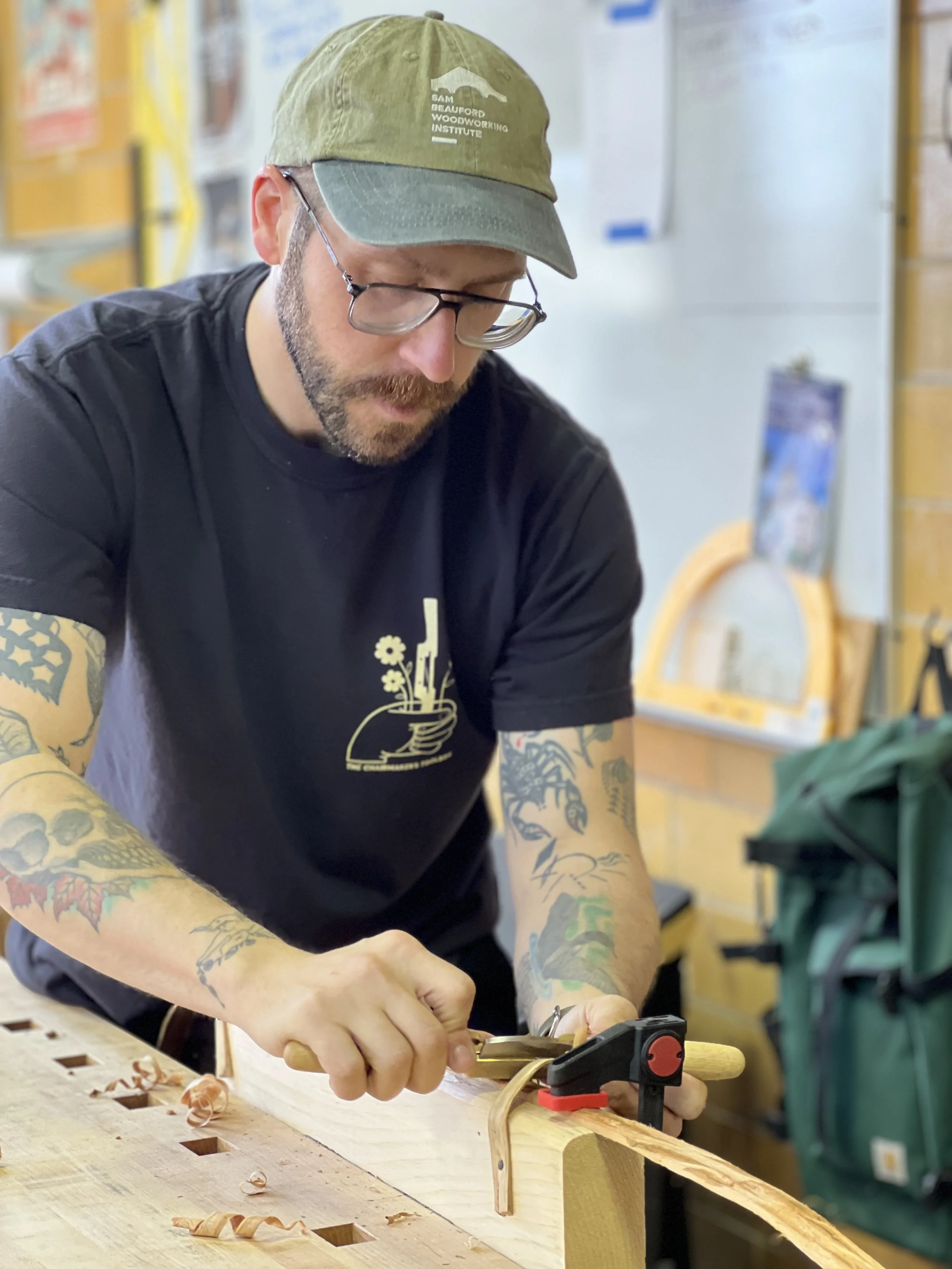
Zack shaves hickory bark to weave a chair seat
When the pandemic brought contracting work to a halt, Zack decided to pursue a more creative outlet. When he discovered SBWI online, he quickly realized he had found his path. “It just clicked,” he says. “A synapse fired in my head and I thought, ‘I’m going to be a furniture maker.’”
After completing the program, Zack stayed on to help with the next class. He worked his way up to an assistant instructor position, then became lead instructor of SBWI’s 9-month Furniture Design program. He begins by teaching the fundamentals of woodworking, from cutting dovetails to fitting mortise-and-tenon joints. Once his students have a strong foundation, he encourages them to look closer and develop their own design instincts.
Zack integrates a “round table” session into his classes, in which each student shares an image of a piece of furniture or other designed object that intrigues them—or one they can’t quite warm up to—and explains why. The ensuing discussion builds a shared vocabulary for students to talk about what they see, what works, and what they might approach differently in their own designs.
New woodworkers haven’t yet absorbed all the craft’s conventions, and sometimes they see possibilities that more experienced makers overlook. Zack describes the design mind as “an infinite portal,” one that opens when students feel free to experiment, question established methods, and discover what else might work.
For example, when a student named Noah suggested an unorthodox way to lay out dovetails, Zack tried it, recognized the improvement, and incorporated it into his lessons. He still calls it “Noah’s Technique” and hopes it encourages other students to remain open to unconventional approaches. “It inspires them to bring their own ideas out,” he says. At SBWI, knowledge is considered something to share and build on, rather than hoard and keep to oneself.
Zack hopes students leave the program with the skills to make furniture, as well as the confidence to keep asking questions, to find their own paths into the craft, and to share what they discover. “Teaching in an educational setting is the most profound way to keep things in transition, to keep things moving,” he says.
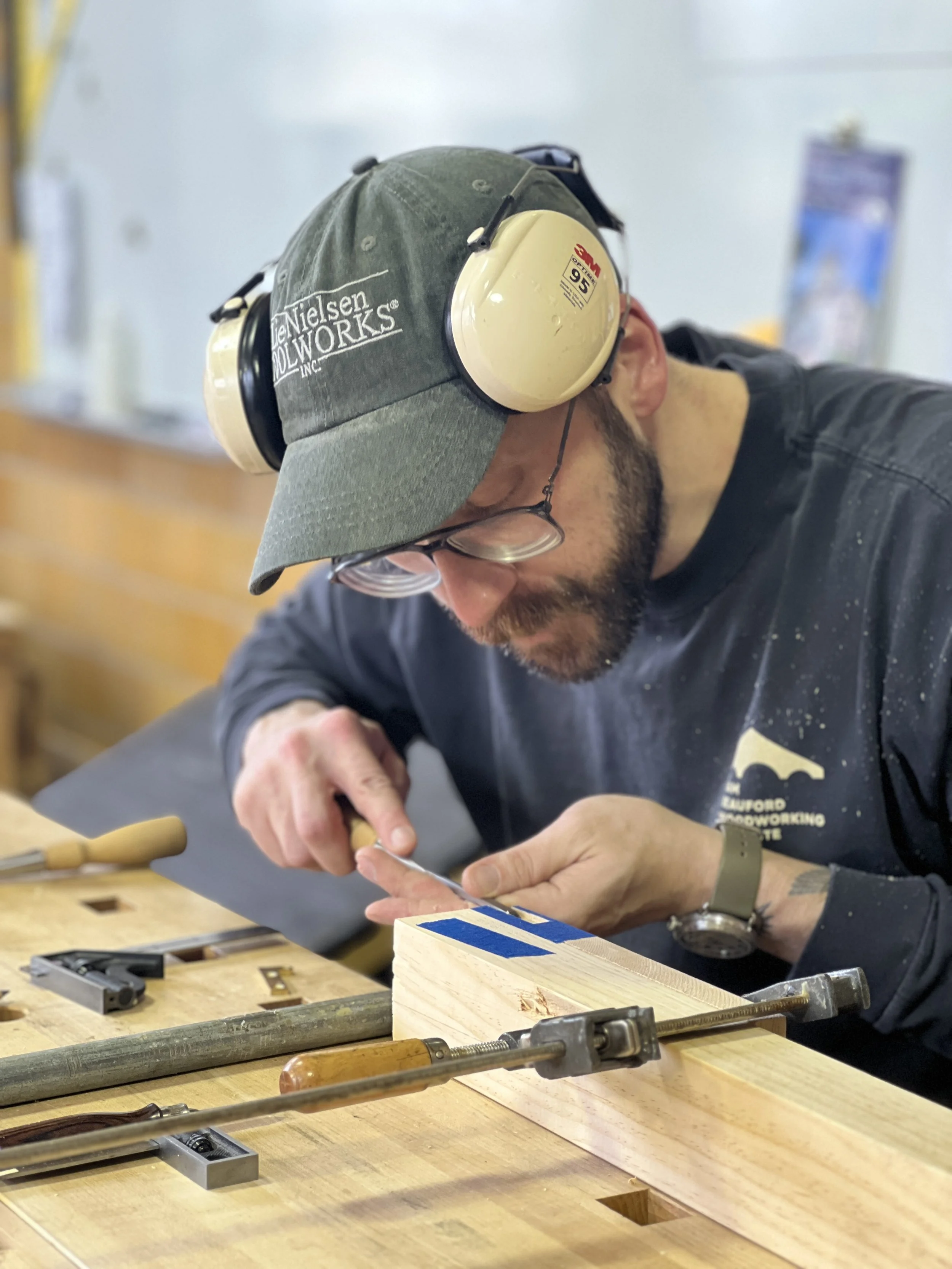
Zack uses a chisel to cut joinery in the bench room
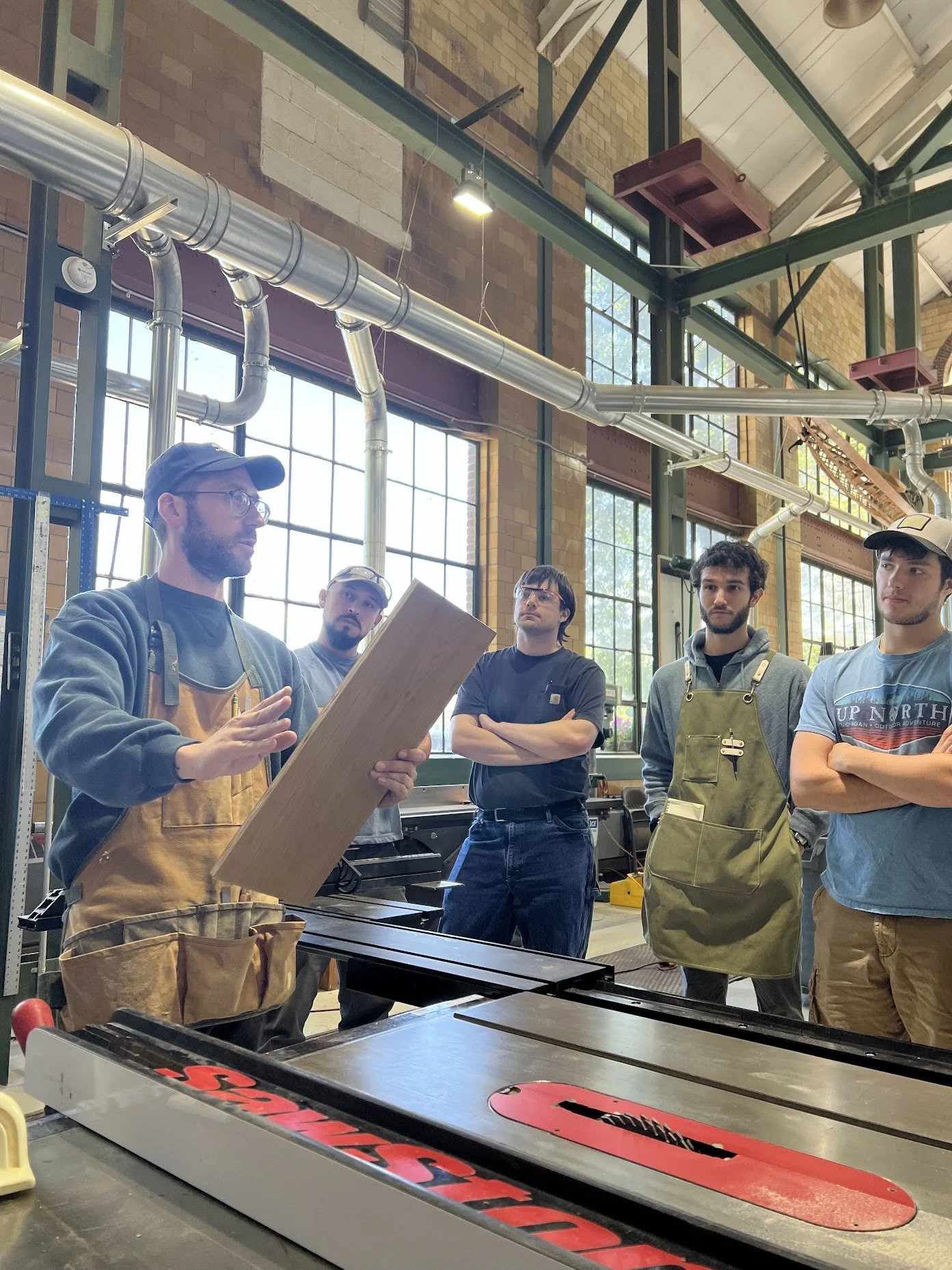
Zack demonstrates proper table saw useage
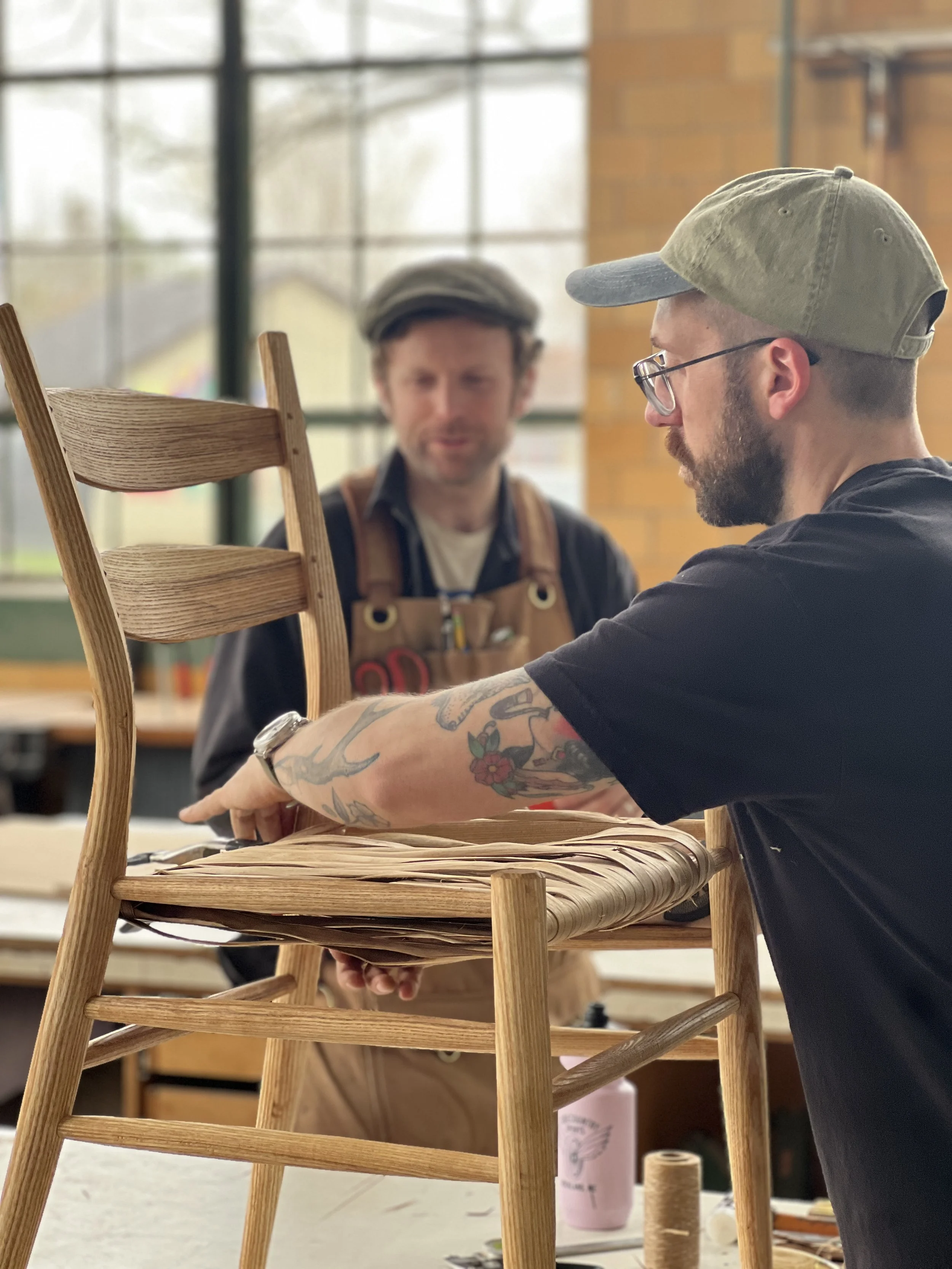
Zack weaves a chair seat from hickory bark

In addition to teaching at SBWI, Zack Fealk also makes custom furniture at Friendo Furniture.
Read Part 1 and Part 2 of this series.
The Sam Beauford Woodworking Institute offers accredited programs in Furniture Design, Timber Framing, and Architectural Carpentry & Preservation as well as weekend and week-long classes that are open to anyone. You can learn more on Instagram, Facebook, YouTube, or online at sbwi.edu.
As seen in Craftsmanship Magazine