
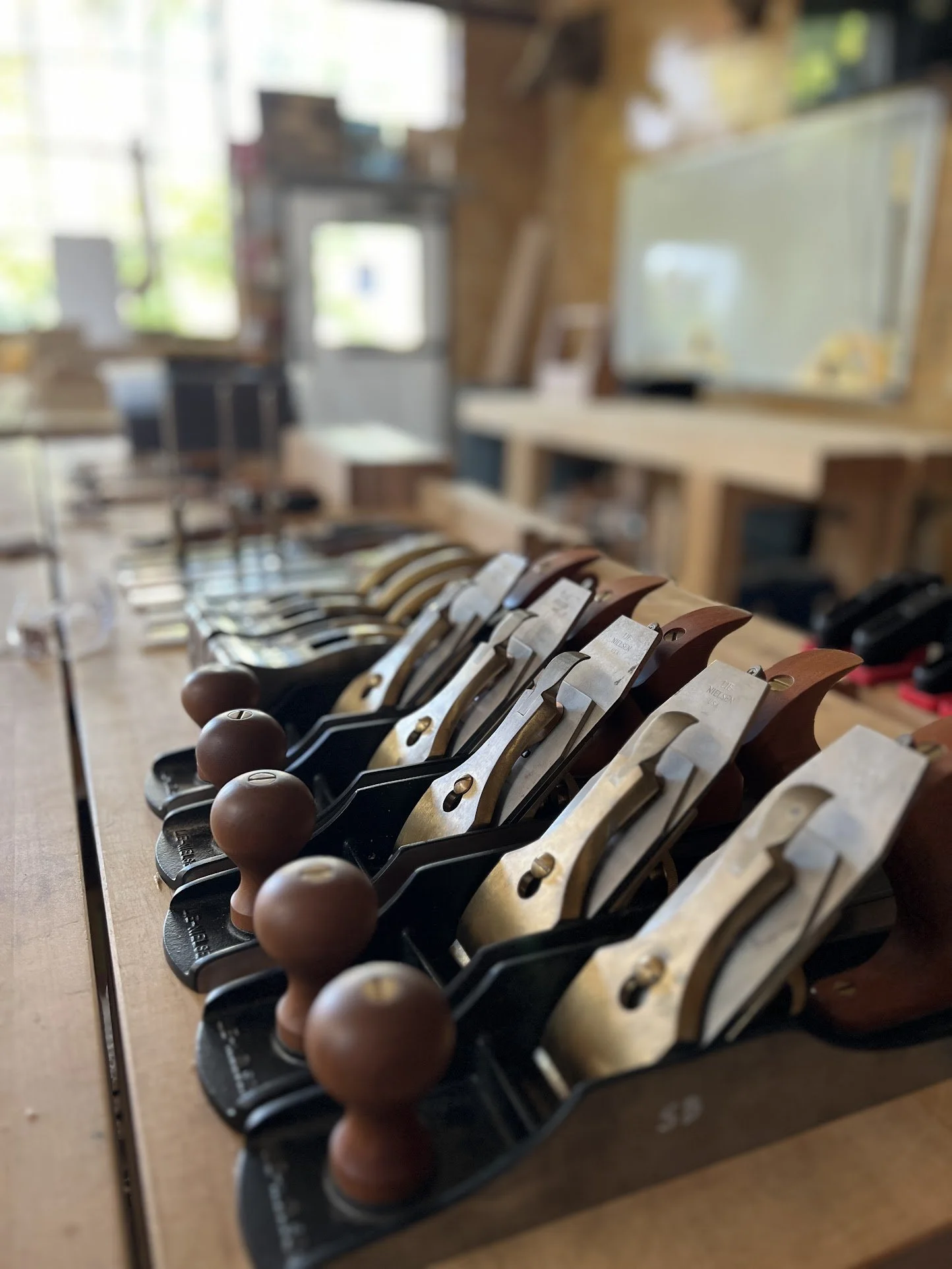
Hands-on preservation
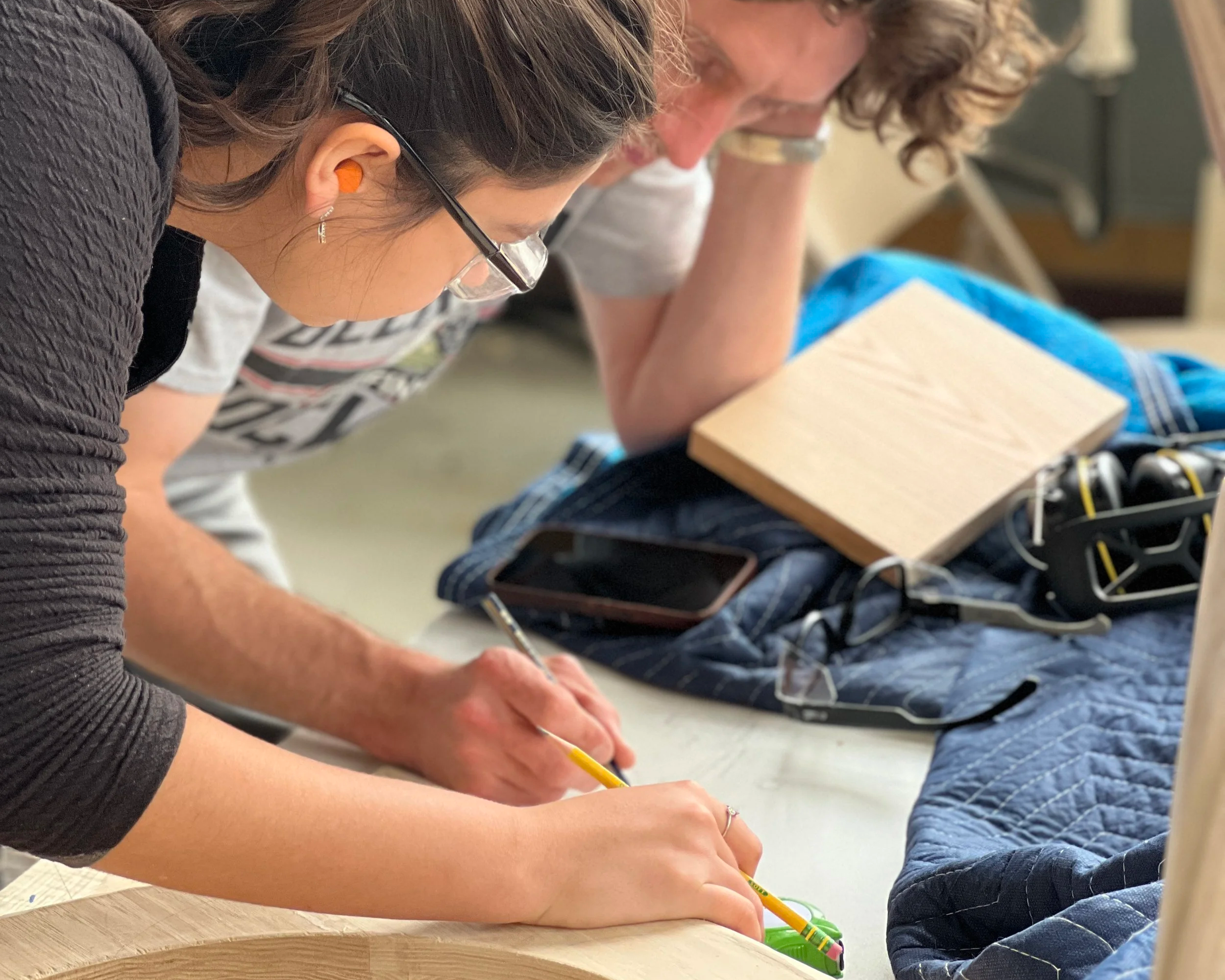
Begin with architectural carpentry in the shop, then apply your skills to preservation work on an existing historic structure.
Learn from specialists
Learn with lead instructor Mary Bindas and visiting preservation trades specialists. Explore different areas of architectural carpentry and preservation through focused instruction throughout the year.
Accredited
Accredited by the Accrediting Commission of Career Schools and Colleges (ACCSC), a recognized accrediting agency of the U.S. Department of Education.
Architectural Carpentry
& Preservation
Train for historic building restoration in Adrian, Michigan. Earn a Professional Diploma in Architectural Carpentry & Preservation through 40 weeks of shop training and fieldwork. The curriculum draws on U.S. Department of the Interior preservation standards, emphasizing repair and the retention of historic materials.
Starts August 30, 2027 · Founding cohort
Graduation: June 3, 2028
Preservation is more than a career, it’s a way of living.
Your training, at a glance
Program & schedule
Professional Diploma in Architectural Carpentry & Preservation
40 weeks · Adrian, Michigan
Monday–Friday, 8 a.m.–5 p.m.
40 training hours/week, with a one-hour lunch break each day.
Graduation: June 3, 2028.
Progress from shop foundations to work on an existing historic structure.
No prior woodworking experience is required. Applicants need a high school diploma, GED equivalent, or higher degree and must complete the admissions process.
Tuition & tools
$28,715
Tuition · 2027–2028
Additional tools: approximately $2,975 before tax and shipping.
View the Preservation tool list →
Estimate dated October 28, 2026. Prices and availability may change; suitable alternative brands and models are accepted.
Funding & moving
Funding eligibility varies.
SBWI does not provide on-campus housing. Explore local housing →
Overview
The program rapidly moves students from foundational woodworking skills into advanced preservation practices and techniques. The first semester begins with measuring and marking, drawing, architectural history, modern carpentry, casework, door and window construction, cabinetry, and staircases before introducing carving, bending techniques, and lathe-turned architectural work. This first half of the program is focused on new construction.
As students progress into the second semester, the program moves from the studio to the job site. This allows students to experience the real-world application of concepts like repair, restoration, preservation, work site safety, stabilization, building codes, material identification, and documentation. Classroom lessons are applied to an existing historic structure, offering opportunities to navigate the unexpected and adapt to actual conditions. Students will also have dedicated time to learning related materials such as masonry, glass, plaster, and more.
The ACP program includes business training in 12 areas to help students plan, price, promote, and manage preservation work.
Career Planning
Time Management
Portfolio
Marketing
Promotions
Pricing
Record Keeping
Legal
Funding
Grant Writing
Business Plan Essentials
Engaging Customers & Selling Your Work
Meet Your Instructor
Mary Bindas
Department Head & Lead Instructor
M.S., Historic Preservation
Eastern Michigan University
Founder, Re-Lite Restoration
Preservation Trades Network board member
Practical skills. Thoughtful preservation.
Mary brings historic window restoration, architectural conservation, teaching, and project-management experience to SBWI’s founding Preservation cohort. She also draws on a network of preservation trades specialists to teach individual modules.
She founded Re-Lite Restoration and previously served as a Historic Building Specialist at the National Park Service’s National Center for Preservation Technology and Training, developing educational experiences and mentoring emerging professionals.
Her teaching connects hands-on repair with the judgment to investigate deterioration, understand materials, and choose appropriate treatments.
The ACP curriculum was developed in collaboration with a national team of respected carpenters, preservationists, architects, engineers, project managers, trades professionals, and educators.
SBWI was fortunate to bring together experts representing union and non-union pathways, large firms, small shops, nonprofit organizations, and higher education. These contributors came from across the country to help shape a world-class program grounded in traditional craft, historic preservation standards, and real-world industry needs. Michigan State University, through the leadership of Dr. George Berghorn and Shawn Huberty, helped facilitate and host the subject-matter expert meetings that guided the development of the curriculum.
Program Advisors
Brenda Ringdon — Black Raven Architects
Jessica Flores, MSHP, LEED GA — Preservation Forward
Kelsey Kotnik — Eastern Great Lakes Chapter of the Association for Preservation Technology
Matt Gaglio — Mod Interiors
Ryan Oldenburg — Oldenburg Carpentry
Mike Belzowski — Belzowski Woodwork & Design
Natalie Henshaw — Campaign for Historic Trades
Patrick Moore — Stereotomy
Nathaniel Ulfers — Historic Preservationist
Ann Dilcher — Quinn Evans Architecture
Jenna Reed Walker — Reed Walker Design Collective
Rebecca Torsell — Ford House, Director of Preservation
What is historic preservation and why do we do it?
What is Preservation?
Five preservation professionals share what the work means to them, why working with their hands has brought purpose to their careers, and why a new generation of skilled craftspeople is urgently needed.

“My time at SBWI was transformational. Class days, as well as studio time, were deeply satisfying. Before Sam Beauford, I had never done any woodworking, but throughout the course, my ideas took shape and plain boards became something lasting - something I was proud of. Evenings became bonfires, potlucks, and camping in the back of cars. Without SBWI, I would’ve never met one of my best friends, who I can now say knows my favorite tool and my worst habit!
SBWI also offers top-notch instruction. Our instructor was always pushing us to think deeper and refine our work. And thanks to company visits organized by the school, I landed a job straight out of the program. My time at the school was one that I didn’t want to end, which for me, says a lot. I left not only happy, but fully equipped, confident, and connected.”
Earn A Living | Make A Life
During your time at SBWI, you will hear from multiple employers throughout the year. These employers are from all over the United States and are eager to hire skilled craftsmen.
-
Carpenter earnings — national context
Preservation careers span several occupations and employers. As one related reference, the U.S. Bureau of Labor Statistics reports a median annual wage of $60,580 for carpenters in May 2025. This national figure includes experienced workers; it is not a starting-pay estimate or graduate employment result for SBWI. Earnings vary by experience, location, employer, and the type of work.
-
Trim Carpenter
Finish Carpenter
Cabinet Maker
Restoration Carpenter
Preservation Trades
Historic Window Restoration
Door Restoration
Architectural Millwork
Fine Carpentry
Preservation Advisor
-
Furniture Design Outcomes at SBWI
Architectural Carpentry & Preservation launches in Fall 2027 and has no graduate outcomes yet. All graduation and employment results below belong to SBWI’s Furniture Design program, called Wood Design in earlier materials. They are provided as context about SBWI’s established program and are not Preservation program results.
Furniture Design graduation rates
2021: 100%
2022: 80%
2023: 85%
2024: 92%Furniture Design employment rates in a training-related field
2021: 86%
2022: 75%
2023: 100%
2024: 90%See the Furniture Design program for its latest reported results and methodology.
Read SBWI’s October 23, 2026 news report on Furniture Design’s Class of 2025 employment results.

Vogue Furniture’s experience hiring graduates of SBWI’s Furniture Design & Woodworking program.
Tuition cost: $28,715
HOW TO APPLY
-
There is no application fee and you are not committed to the program by filling out the application.
-
Once we receive your application, we will contact you to schedule a school tour and interview. We prefer in-person tours, but we can schedule a virtual remote tour if needed.
-
On your tour day, we will need three items from you: a letter of recommendation, a statement of purpose, and proof of high school completion (transcripts, diploma, or degrees). Applicants using VA funding are required to submit high school and any college transcripts. If you attend virtually, you will need to submit these materials via email to admissions@sbwi.edu
-
The Enrollment Committee will review your application for acceptance into the program. Acceptance is based on program capacity, applicant goals, and overall fit for the program. Every year we receive a large number of applications, and the selection process is especially competitive due to limited space in the program.
-
Upon acceptance, we will need the following items: a signed enrollment agreement and tuition deposit (unless the applicant is pre-approved for a payment plan or using VA benefits). If the applicant is pre-approved for a payment plan, the signed loan agreement is also required upon acceptance.
-
2027-2028 Tuition cost: $28,715
Enrollment Deposit $14,357.50 due upon acceptance
Final Payment: $14,357.50 due July 1st, 2027
*Debit/Credit Card Payments will be charged a 4% processing fee. The Processing Fee will be added to the payments.
Students purchase their own tools and supplies from outside vendors. The recommended Architectural Carpentry & Preservation tool list totals an estimated $2,975.31 before tax and shipping, based on prices dated October 28, 2026. This includes safety equipment, layout supplies, hand tools, power tools and storage. Prices and stock may change. Suitable alternative brands and models are accepted. These purchases are separate from the $28,715 tuition for 2027–2028.
Architectural Carpentry & Preservation Tool & Supply List (PDF)
*Tools are required for all participants. In rare instances, SBWI has a limited amount of loaner tools available.
Preservation Can Take You Anywhere — careers in the preservation trades.
Where can preservation take you?
Ryan Prochasksa, Nathaniel Ulfers, and Rebecca Torsell share experiences spanning historic sites across the United States and preservation work in Japan and the Caribbean.
Their stories reveal a field with remarkable variety: architectural carpentry, traditional-skills teaching, archives, conservation, fieldwork, and preservation leadership.
A Trade for Your Head, Heart, and Hands — working in the preservation trades.
A Trade for the Head, Heart, and Hands
Historic preservation combines history, architecture, artistic judgment, technical knowledge, and physical skill. Every building presents questions to investigate, materials to understand, and problems to solve.
For people who love learning, creating, and understanding how things work, preservation offers a career where those interests can come together.
FAQ
-
A degree is awarded by a college or university and typically includes general education courses alongside study in a chosen field.
A professional diploma focuses on skills and training in a specific field. Successful participants in SBWI’s 40-week program earn a Professional Diploma in Architectural Carpentry & Preservation.
-
Students from many backgrounds are welcome, and no prior woodworking experience is required. Applicants need a high school diploma, GED equivalent, or higher degree and must complete SBWI’s admissions process. Admission also depends on program capacity and fit.
Students include career changers, veterans, recent graduates, and experienced makers seeking further training.
-
We do not have on-campus housing, but there are shared houses with bedrooms available to rent for SBWI students. There are also many rental apartments and houses available in Adrian, and there is a list available of SBWI students looking for a roommate as well.
-
SBWI provides materials for each project. Tuition includes a one-year subscription to SketchUp. Students do not need to purchase books; class materials are available in the student portal.
Students purchase their own tools and supplies before class begins. The recommended Architectural Carpentry & Preservation list totals an estimated $2,975.31 before tax and shipping, based on prices dated October 28, 2026. The list includes safety equipment, layout supplies, hand tools, power tools and storage. These purchases are additional to tuition. Download the Architectural Carpentry & Preservation Tool & Supply List (PDF).
Prices and stock may change. Suitable alternative brands and models are accepted; tools should be high-quality. If you already own a suitable tool, you may use it. Students ordering from Blue Spruce Toolworks, Lee Valley, Lie-Nielsen and Barr Tools can receive a discount. Purchased tools belong to the student.
-
Student loans are not available for this program, but our students have used private loans in the past to offset tuition and living costs. We do accept GI Bill and Veteran Readiness and Employment funding, and we also have a Payment Plan option. Check out our Scholarship Page as well.
-
The program meets Monday through Friday for 8 hours per day. It is an intensive program where you learn a lot in a short period of time. A part-time job is manageable, but a full-time job would be incredibly difficult. Your education would likely suffer.
-
An applicant who has not visited the school prior to enrollment may cancel without penalty following either the regularly scheduled orientation procedures or following a tour of the school facilities and inspection of equipment where training and services are provided. Cancellation must be requested prior to or within the first week of the enrollment period by contacting the Admissions Office via text, email or phone.
An applicant requesting cancellation prior to or during the first week of the enrollment period is entitled to a refund of all monies paid.
In the event of an applicant requesting cancellation prior to or during the first week of the enrollment period, there is no registration fee retained by the School.
Processing and finance charges for debit and credit card payments are non-refundable
-
Per the Code of Federal Regulations CFR 21.4255, the SBWI has a pro-rata refund policy for the refund of the unused portion of tuition, fees and other charges in the event the veteran or eligible person fails to enter the program, or withdraws, or is discontinued there from, at any time prior to completion. An enrolled student who withdraws, is dismissed, or otherwise terminates their enrollment will be processed under the following policies:
An enrollment period is defined as an academic year which is ten months (40 weeks); therefore an enrollment period for that program is ten months (40 weeks).
SBWI uses the Date of Determination to calculate refunds. The Date of Determination is the date the student’s enrollment was terminated by the School, the date the School was notified by the student that they were withdrawing, or the date the student was determined by the School to be withdrawn due to absences. Money due to the applicant or student will be refunded within 60 (Sixty) days after the date of determination. Written notification of withdrawal from the student is not required for refund payment.
In cases of prolonged illness, death in the family, or other circumstances that make it impractical to complete a program, the School will make a settlement reasonable and fair to both parties.
In the case of a student who completes academic requirements early and within 60% of an enrollment period, a prorated portion of the tuition for that period will be due, based on the time completed, rounded up to the nearest 10%. For early completion after 60% of the enrollment period, the entire period’s tuition will be due.
Processing and finance charges for debit and credit card payments are non-refundable.
If enrollment is terminated, the student will owe tuition and fees based on the following schedule:
Prior to or during the first week 0%
During the second week 20% or $5,743.00
During the third week 35% or $10,050.25
During the fourth week 50% or $14,357.50
During the fifth week 70% or $20,100.50
After the fifth week 100% or $28,715.00

Successful participants of the 40-week program will graduate with a Professional Diploma in Architectural Carpentry & Preservation.
Sam Beauford Woodworking Institute is accredited by the Accrediting Commission of Career Schools and Colleges (ACCSC), a recognized institutional accrediting agency by the U.S. Department of Education.
SBWI programs are eligible for GI Bill® and Veteran Readiness and Employment® (VR&E/VocRehab). Veterans, click here for more info. The Sam Beauford Woodworking Institute is recognized as being a Veteran-Friendly School by the Michigan Veteran Affairs Agency. GI Bill® is a registered trademark of the U.S. Department of Veterans Affairs (VA). More information about education benefits offered by VA is available at the official U.S. government website at http://www.benefits.va.gov/gibill