
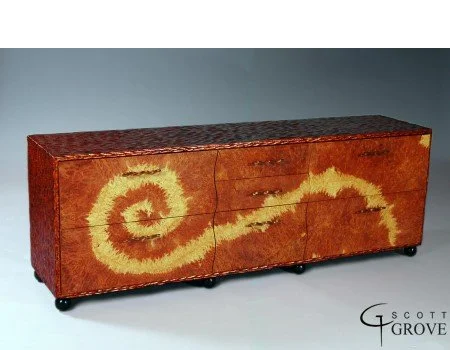
Laural — spiral-matched redwood burl with a copper polychrome case. Artwork: Scott Grove. Image source: scottgrove.com.
From swirling veneer patterns to sculptural furniture and architectural restoration, Scott Grove has built a career by asking what else is possible. This March, he brings that spirit of discovery to a five-day class at SBWI.
Scott Grove remembers the day he fell in love with veneer. He was buying a used tool from the sculptor and furniture maker Wendell Castle when a visit to Castle’s gallery changed his direction.
“I went up to [Wendell’s] gallery and that moment changed my life.” For the first time, Grove saw highly figured veneer, and he was captivated. “I wanted to know everything I possibly could about this wonderful wood.”
That curiosity became a career. Today, Scott is known for pushing veneer beyond conventional flat surfaces, developing his signature spiral matches and techniques for wrapping wood over compound curves.
Wood grain as a design language
In Scott’s furniture, the grain becomes the focal point. Light and dark bands sweep across cabinet fronts, curl into spirals, and draw the eye around sculptural forms. The precision of the matching lets separate pieces of veneer read as one continuous composition.
His Laural dresser pairs spiral-matched redwood burl with a chip-carved case and copper polychrome finish. Relationship, a walnut-burl buffet with a silver-leafed case, carries its dramatic spiral across doors that conceal 16 drawers. The pedestal table Vortex brings that sense of movement into a circular form.
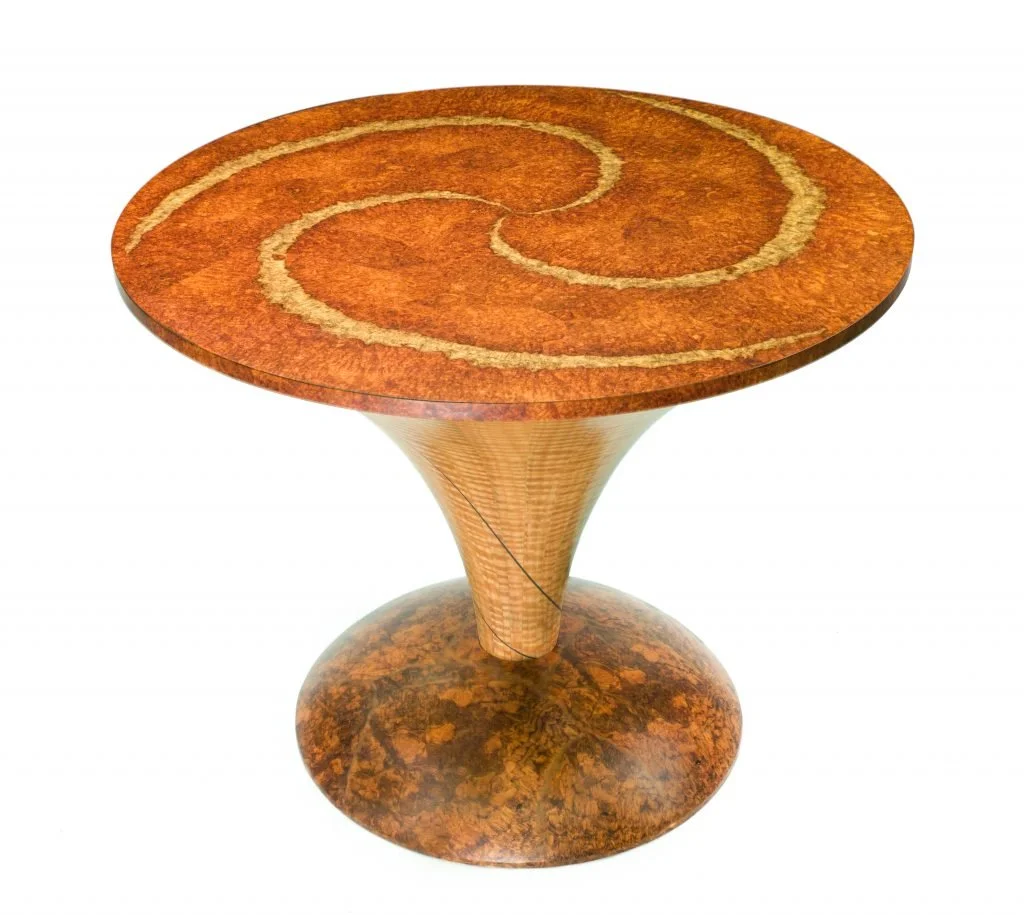
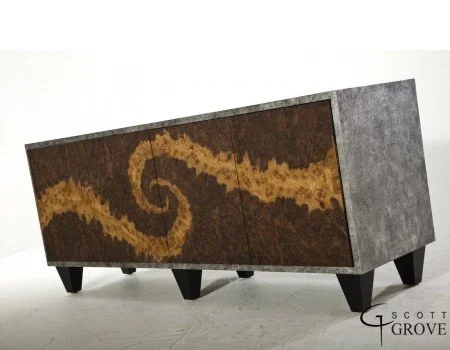
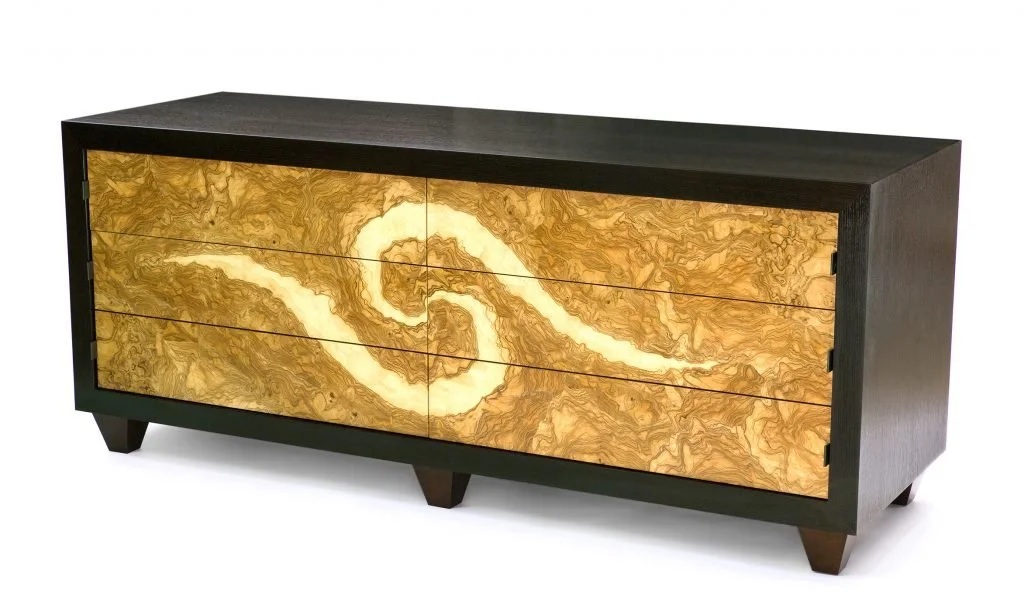
These pieces show how veneer can shape the identity of a piece of furniture. Explore more examples in Scott’s spiral-matched collection and furniture portfolio.
Furniture, sculpture, and the freedom to experiment
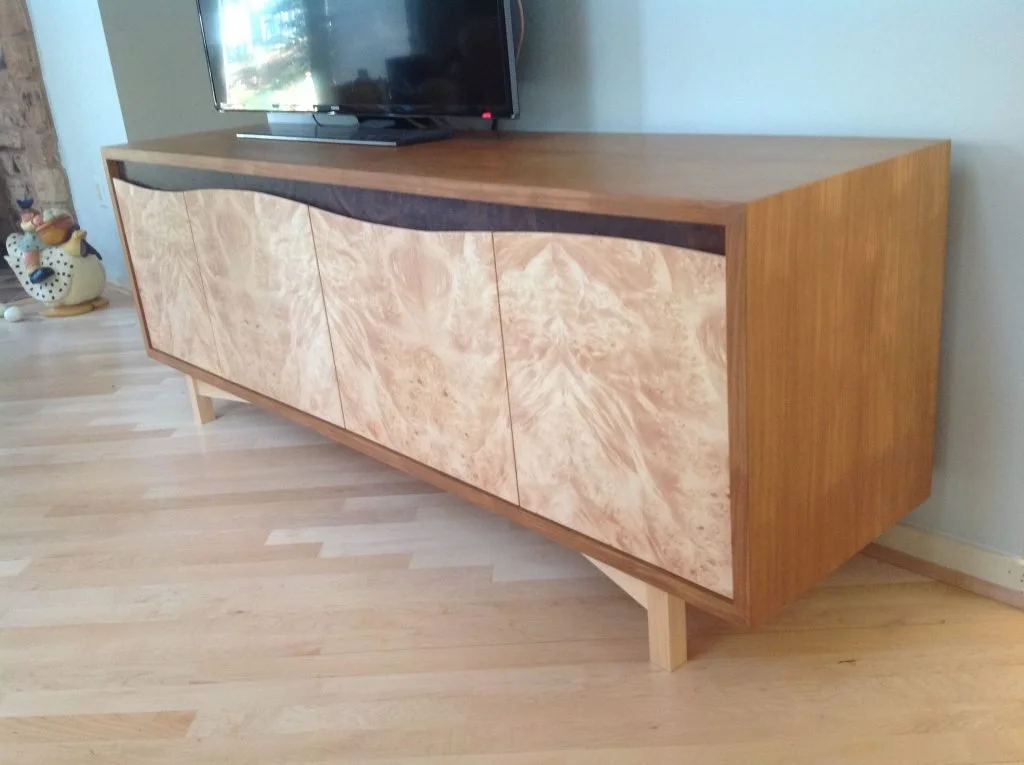
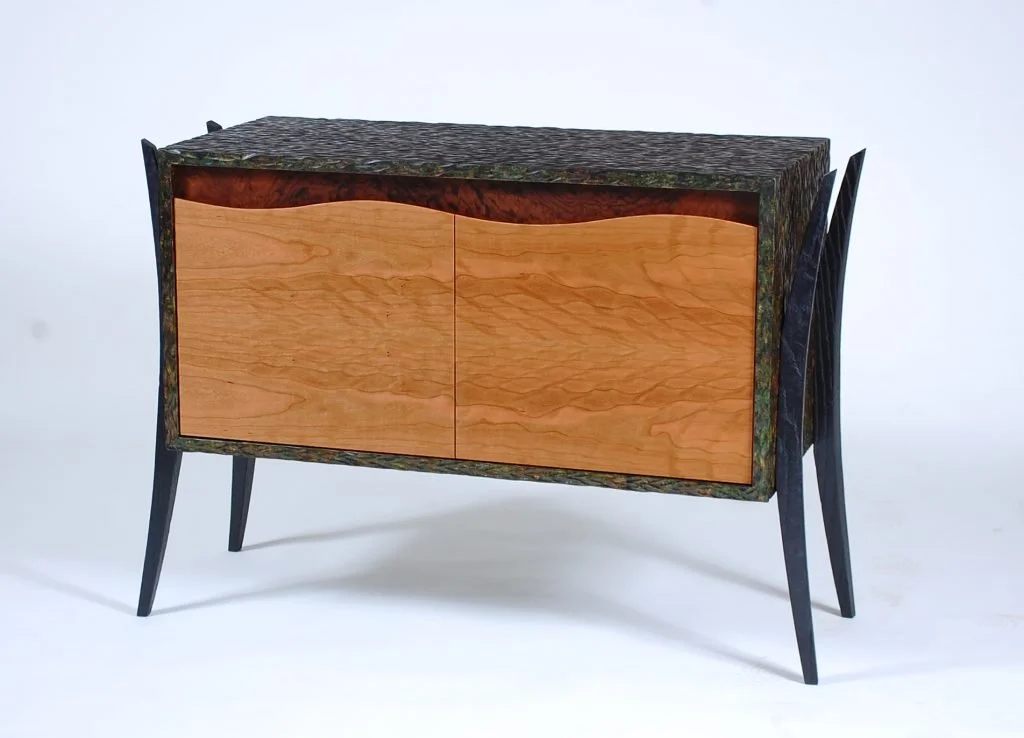
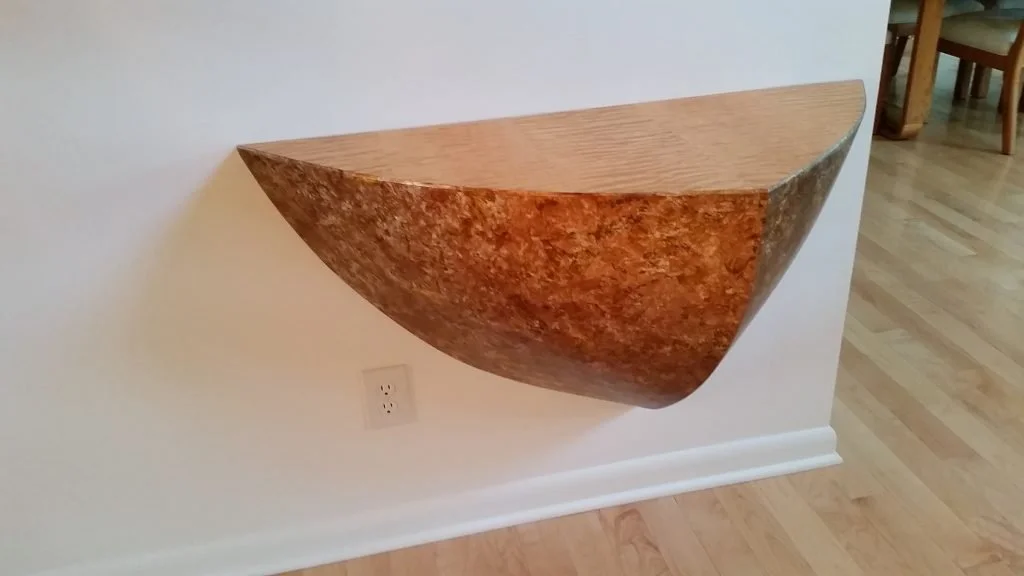
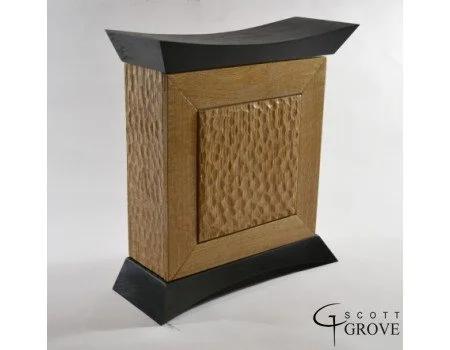
Scott’s range extends from furniture made for everyday living to objects that invite a closer look. Coen combines anigre and maple burl in a long, gently curved cabinet. Belly pairs figured cherry and walnut burl with chip carving and a polychrome finish. The wall-mounted Saber, made with curly maple and copper leaf, seems to float.
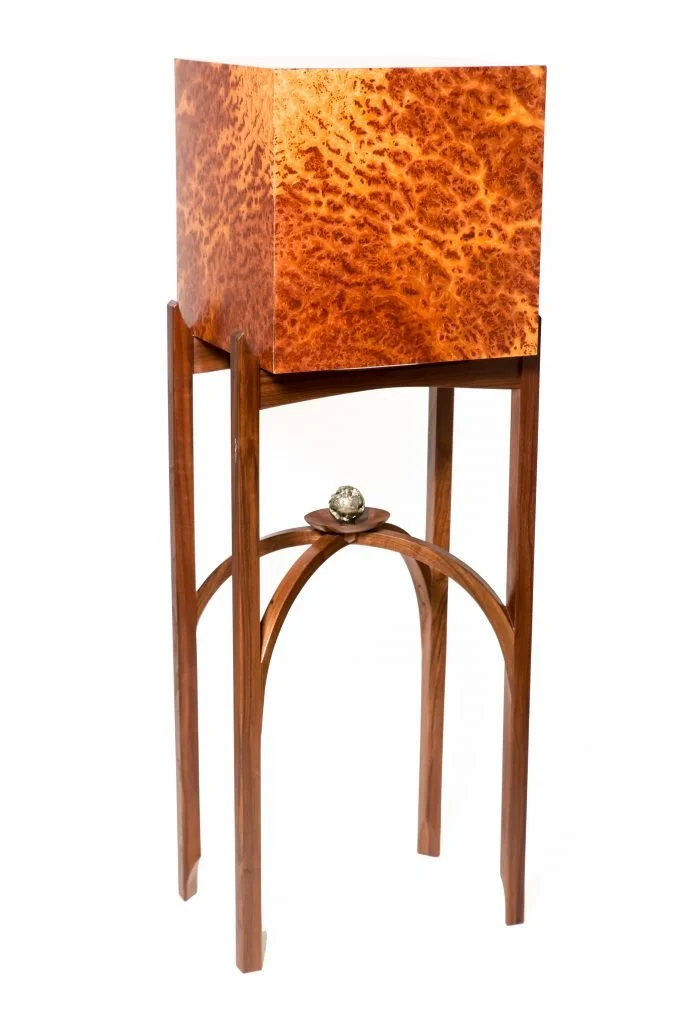
The tall Pixel cabinet balances a compact case over slender legs and an arched base, while Oak ding ding turns a keepsake cabinet into a study in carved texture. Each piece gives familiar furniture forms a distinct personality.
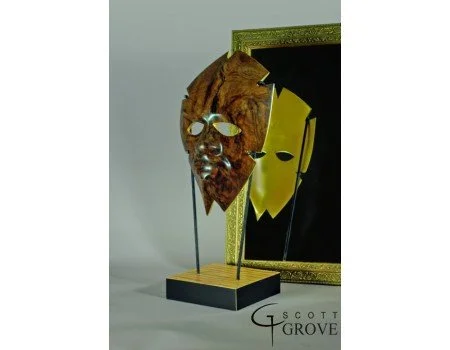
For Vision Reigns, Scott took a different path: a sculptural mask honoring choreographer Garth Fagan. Formed from a mold of Fagan’s face and lined with 24-karat gold, the work joins portraiture, material experimentation, and a tribute to another artist.
A lifetime of learning by making
Scott comes from a long line of artists and engineers. He grew up in northern Westchester County, New York, in a community of artists, designers, and creative thinkers that included composer Aaron Copland. At 14, he won a countywide competition for a local lamp manufacturer and was hired to make assembly drawings for chandeliers and lamps. Work in a photography darkroom followed.
A strong art portfolio took him to the Rochester Institute of Technology’s Environmental Design program. His appetite for learning often meant combining disciplines that might seem unrelated. “I wanted to learn human anatomy and I also wanted to learn blacksmithing,” he remembers, “so I hand forged every single bone in the human skeleton bone by bone.”
From furniture to historic architecture
That willingness to learn opened another door when an architect asked Scott to reproduce a cornice in fiberglass. “I had no idea what he was talking about, but I researched it and figured it out.” The commission launched a career in historic restoration.
In his November conversation with SBWI, Scott described recently completing his largest project yet: a five-year preservation and renovation effort on Rochester’s Powers Building. The scale is very different from a veneered cabinet, but the work reflects the same interest in materials, form, and solving difficult problems.
Talking with Scott, his commitment to creativity, hands-on work, and the freedom to explore comes through clearly. He never wants to be the guy who sits in meetings all day, a role his success as a woodworker and designer once led him toward. Even a possible circus career lost its appeal when it promised too much repetition. In his twenties, he taught himself to juggle and landed a gig with the Barnum & Bailey Circus—but the prospect of performing the same show eight times a week and sleeping in a boxcar sent him back to woodworking.

“We’re all going to learn together.”
Scott brings that same exploratory approach to teaching. He enjoys experimenting with new techniques alongside his students and continuing to push the boundaries of veneer.
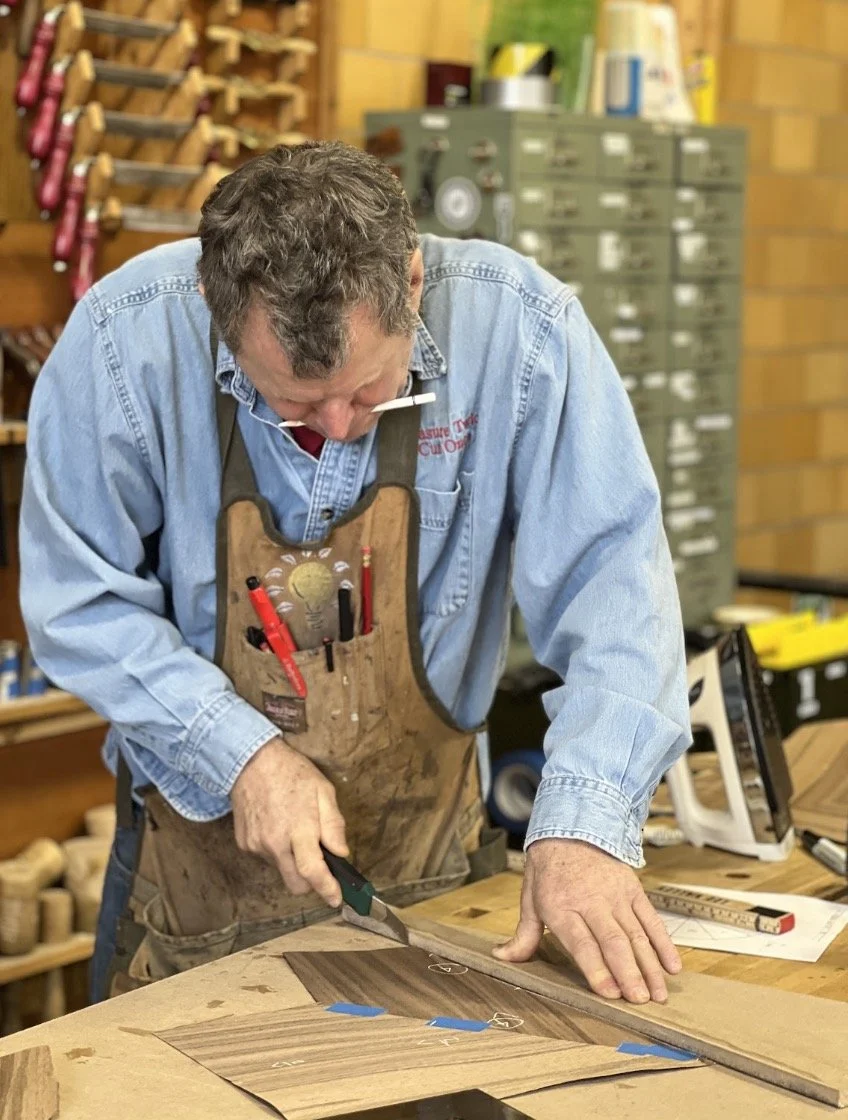
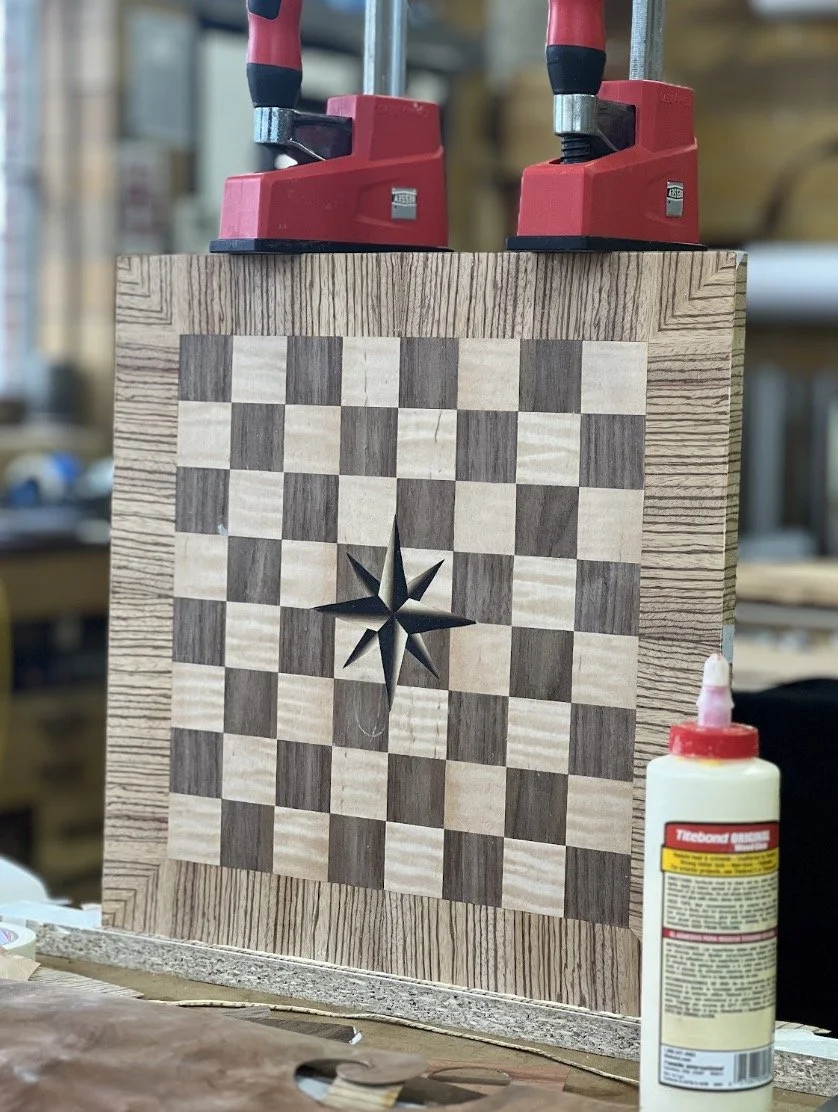
From March 1–5, 2027, he will teach Learn and Master Veneer at the Sam Beauford Woodworking Institute in Adrian, Michigan. In this fast-paced, hands-on class, students will learn to select, cut, seam, match, press, and inlay veneer, as well as explore compound veneering. Projects include a highly figured chessboard and technique samples to take home.
The course welcomes beginning, intermediate, and advanced woodworkers, with no prerequisites. Scott’s message to students who are interested but inexperienced is simple: “I’ll get you there,” he says. “I haven’t lost one yet!”
Explore the class and register for March 1–5, 2027 →
Based on Carolyn Racine’s interview with Scott Grove. Portfolio photographs sourced from Scott Grove’s official website; workshop, chessboard, and restoration photographs supplied with the interview. Artwork by Scott Grove. Visit scottgrove.com to explore more of his work.