
Wood Works: A Marine’s Next Step
Welcome to “Wood Works,” a new monthly series profiling SBWI Alumni who are working at the intersections of carpentry, fine art, mass timber, and more. Follow along on our website or sign up for our newsletter to never miss a story.
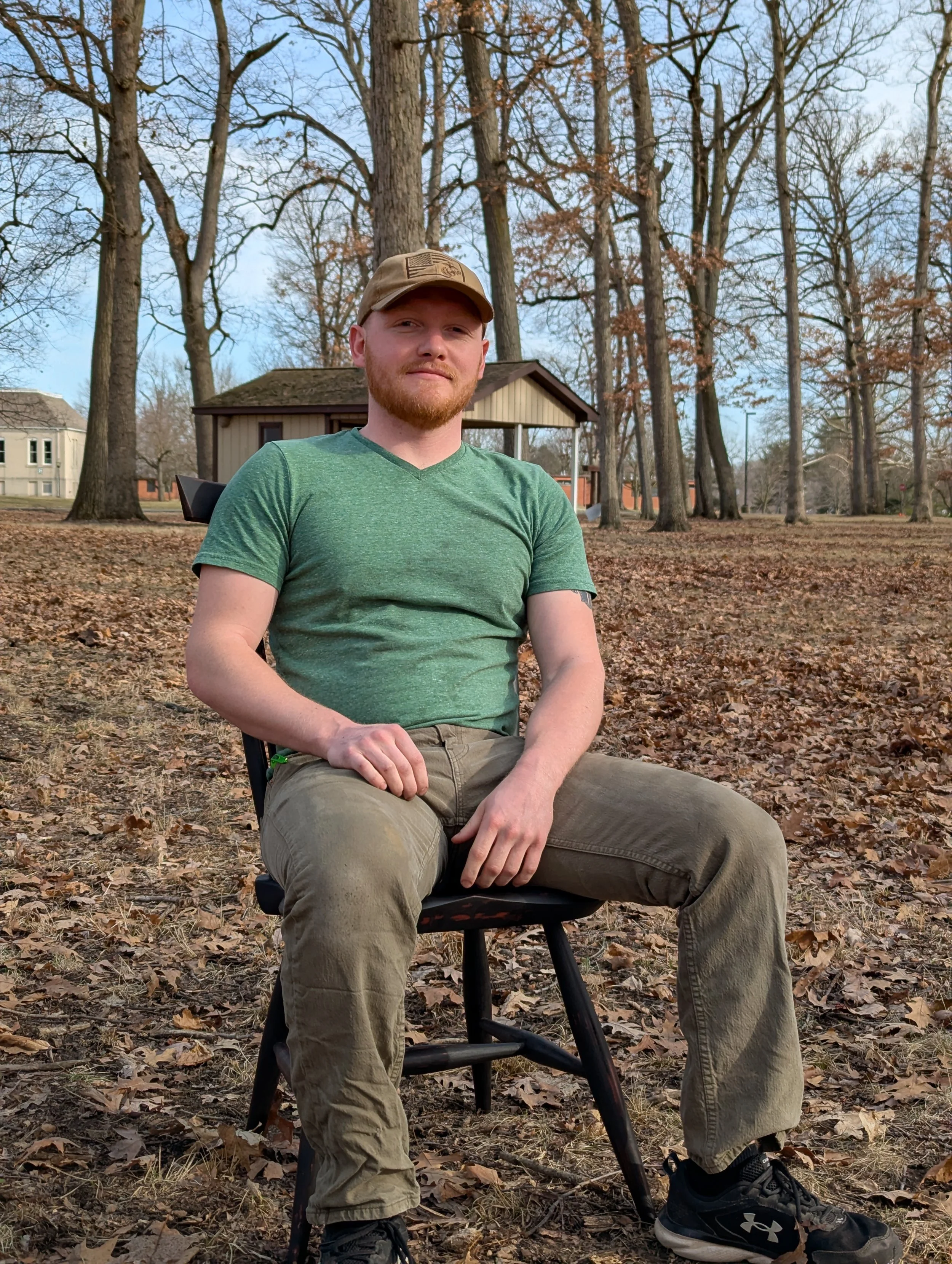
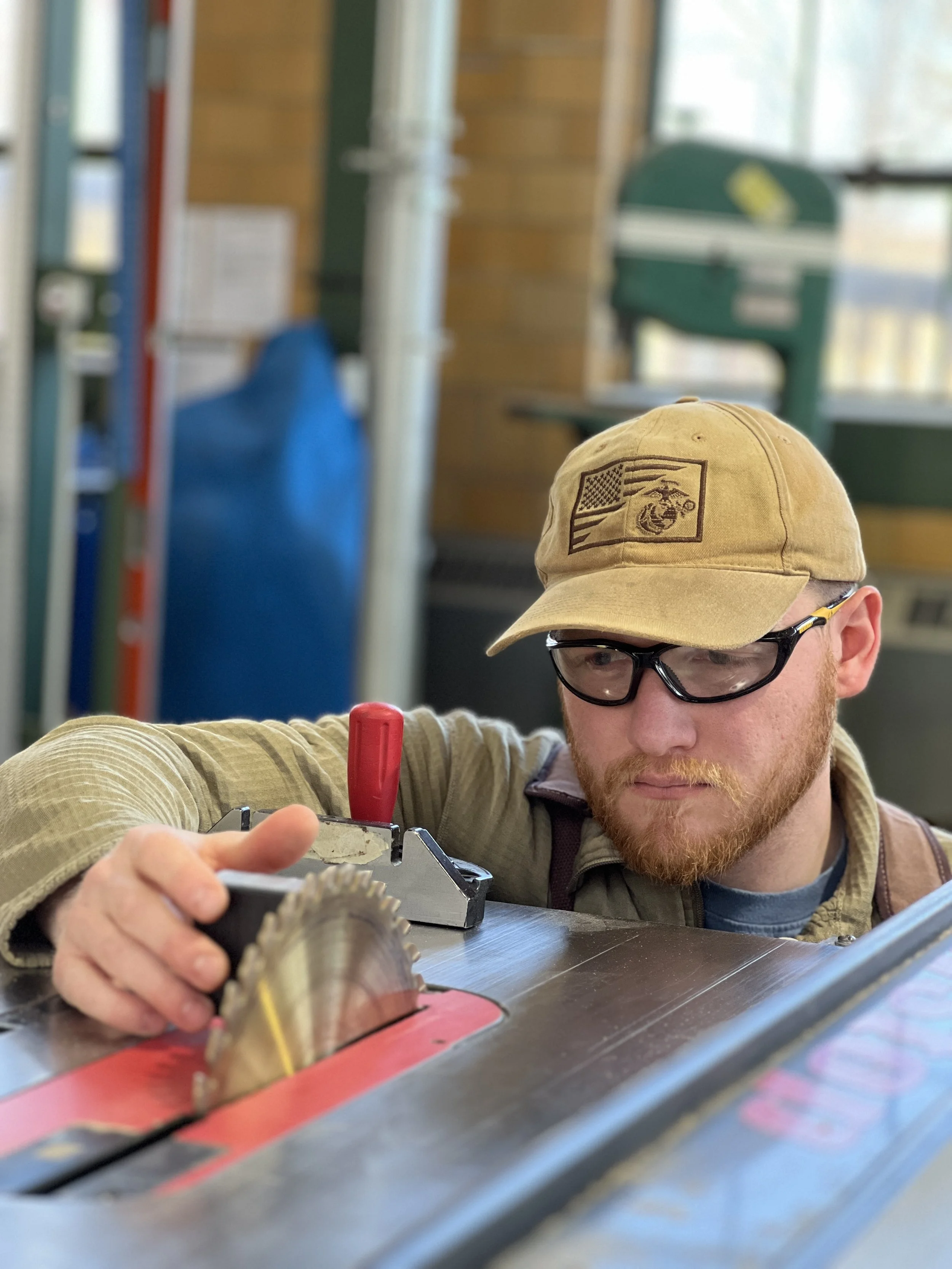
Chase on campus at SBWI.
A Marine’s Next Step: Chase Swatzell Crafts Furniture and A New Future
When Chase Swatzell left the Marine Corps in 2022, his next move seemed clear, if a bit underwhelming.
“I figured I needed to go to college, because that’s what everyone told us to do,” he said. “If I’m being honest, I kind of hated it.”
Chase originally enrolled as a business major before switching to psychology. During that first year out of the service, he describes himself as needing direction, and he started to find real meaning in his work at a mental hospital in Grand Rapids. But even then, something still felt unresolved.
“I’ve always liked the trades. I like being active and working with my hands,” he said. “But I had some back injuries associated with the military, so the trades no longer liked me. I was trying to figure out something I could do as a hobby, working with my hands. I didn’t necessarily think about it as a career.”
Woodworking wasn’t something Chase grew up immersed in. His dad studied construction management but worked in an office, and his grandfather was more of a hobbyist than a professional woodworker. Still, the instinct to build had always been there.
“I was the kind of kid who would not do their homework because they were too busy building Legos,” he said.
After a year or so, Chase was about 20 credits shy of finishing his bachelor’s degree, but still unhappy with his direction. This is the kind of moment where a lot of people would put their heads down and just accept it. Instead, he made a different choice.
“I started looking for woodworking classes near me,” he said. “One night, I found SBWI, and I saw that they took the GI Bill. So I took a leap of faith. I applied and was accepted. I dropped out of college, and I decided to use the GI Bill for something I was interested in.”
Life After Service
For Chase, woodworking offered something steady at a time when much of life felt brand new.
“From my personal experience, getting out of the military was difficult. It is adjusting to a society you really don’t know how to be a part of. You go from a very structured lifestyle to, ‘I don’t know what I’m going to do today.’ The transition is very hard. ”
“The program added that structure back in. Working with my hands to make something, I know what the next step is,” he said. “And once you have a tangible piece at the end of it, it’s very rewarding.”
Chase continued, “My overall impression of the program was that it was incredible. Life-changing. It gave me a lot of perspective. It was very helpful to be able to make something, and it’s really good for veterans.”
As the program progressed, Chase’s confidence did too. By the time graduation approached, he began to see woodworking as more than a meaningful outlet.
“I fell in love with it,” he said. “And I decided, I’m going to give it a try. I’m going to try starting a business.”
After graduation, Chase launched Heirloom Lakes Fine Woodworking, and started learning what it meant to turn craft into commerce.
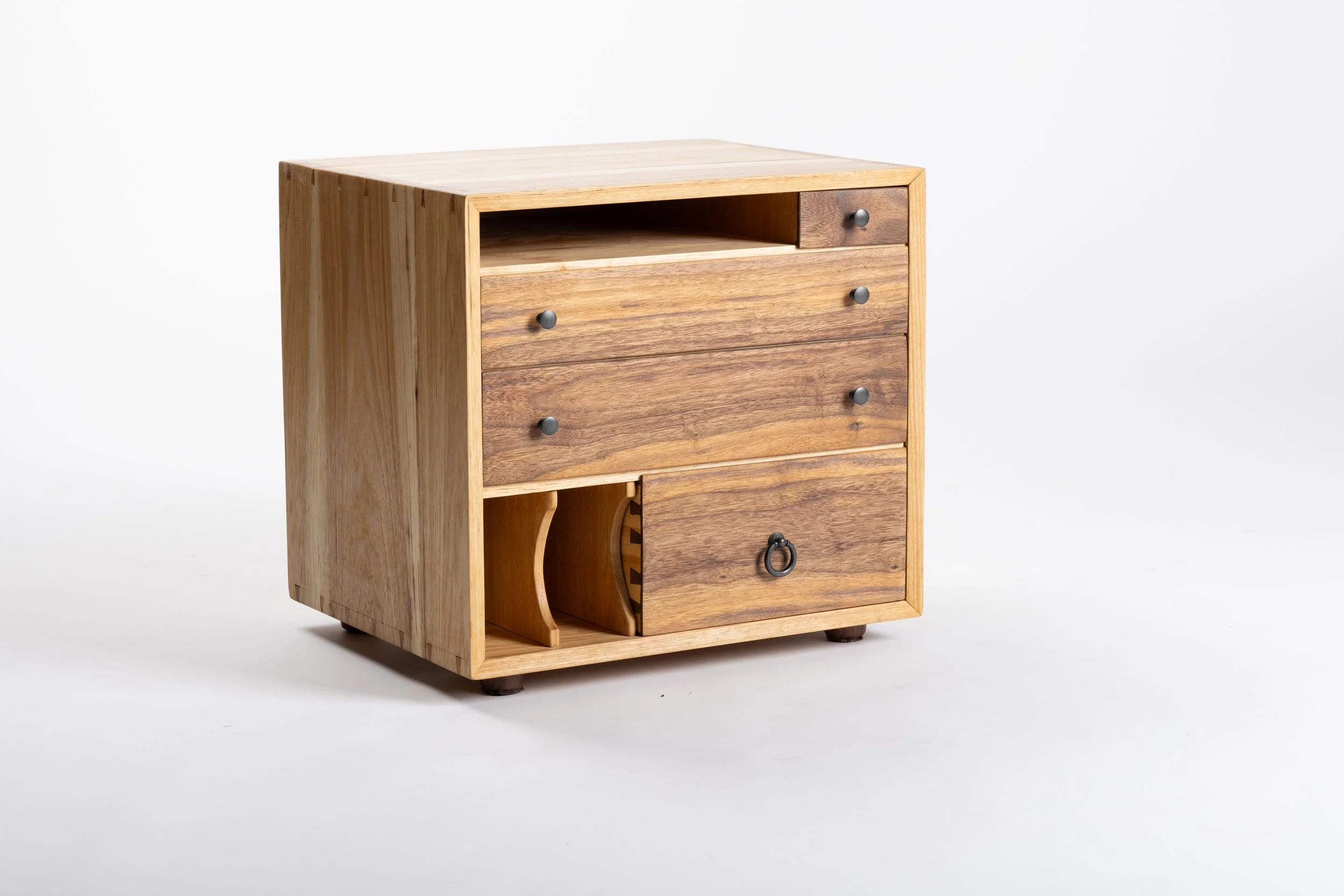
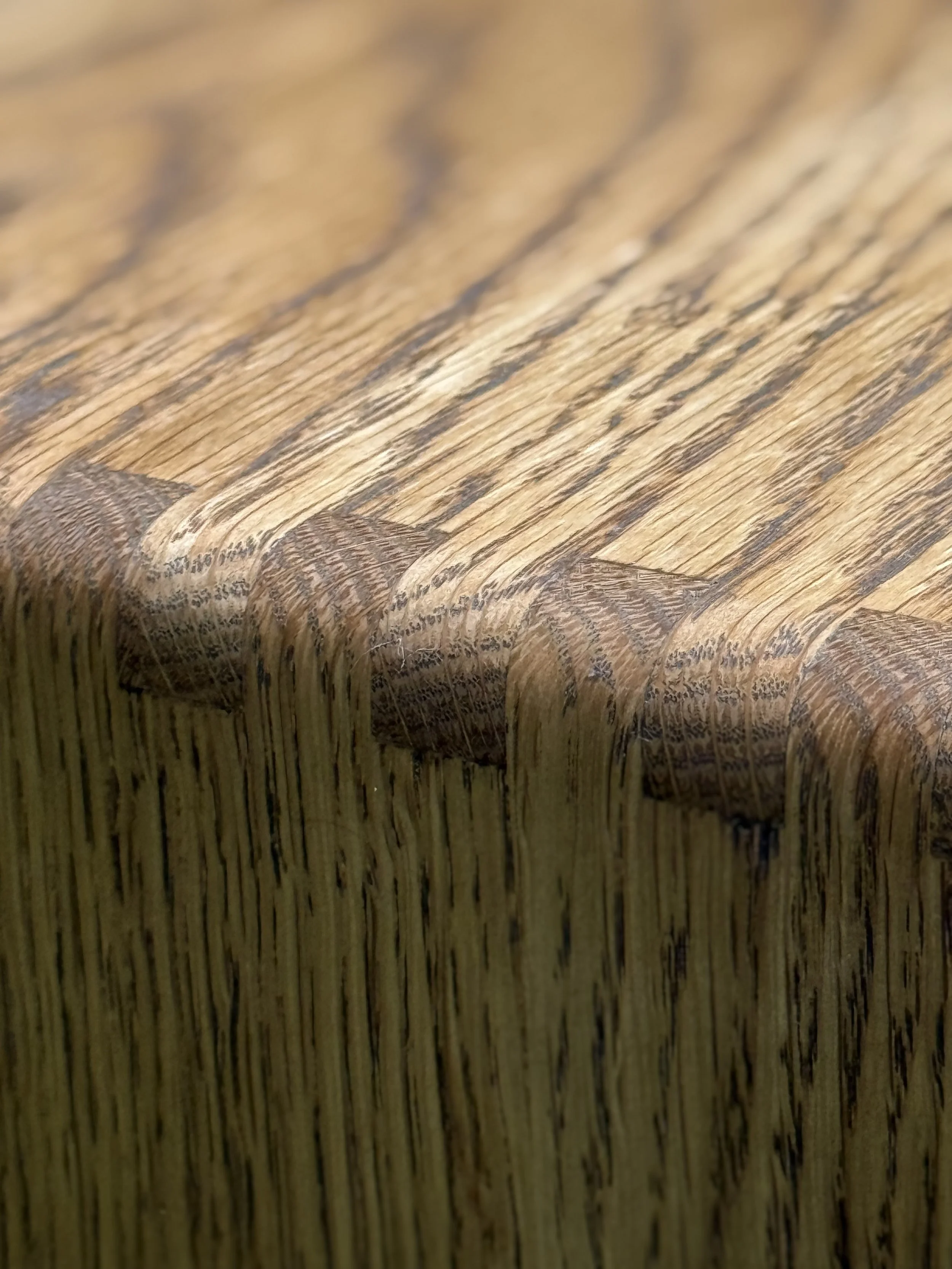
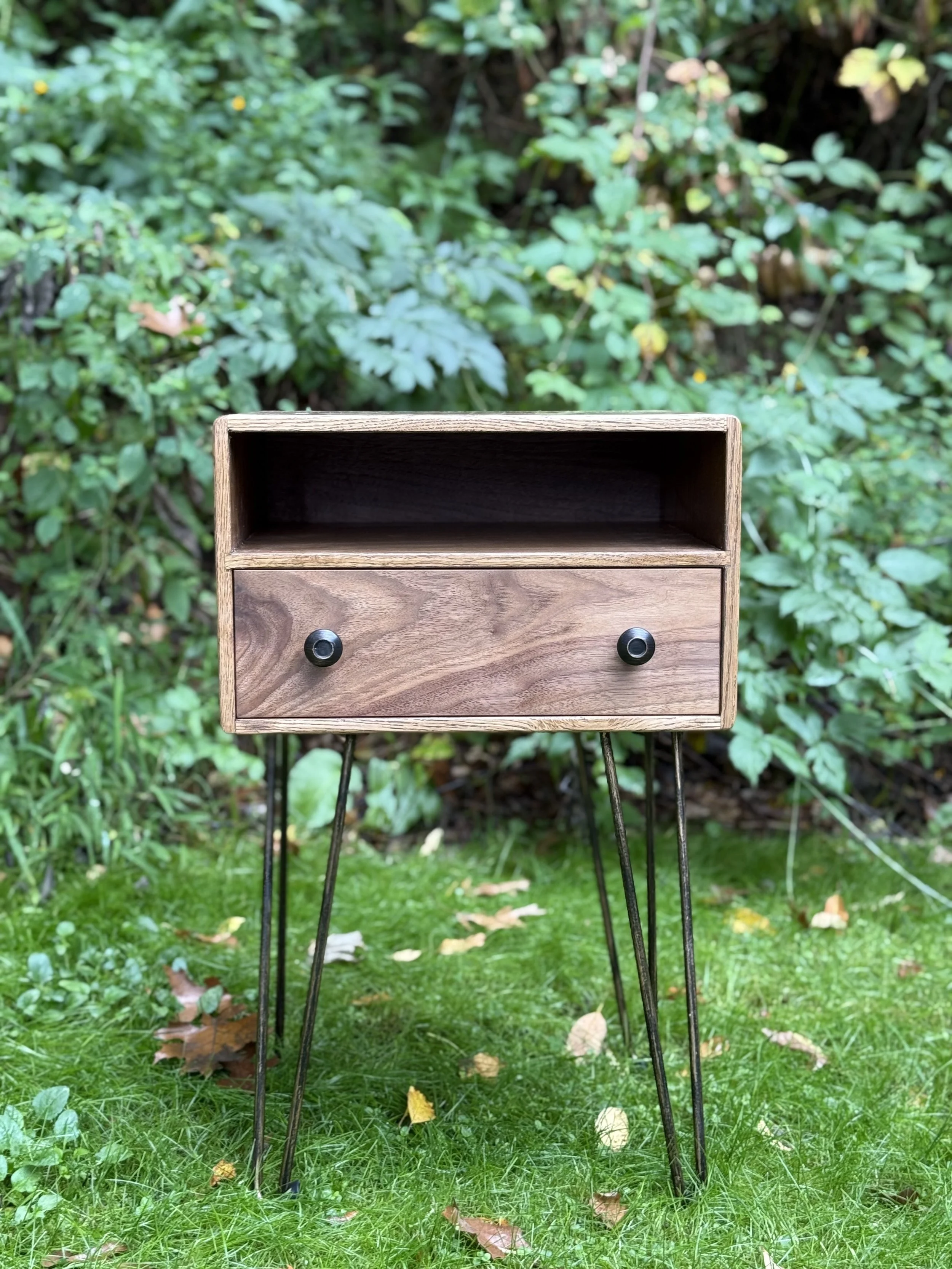
“I put my pieces, my chair and my cabinet from the program, into the Peter’s Valley School of Craft Wooden Art Exhibit, and I got in,” he said.
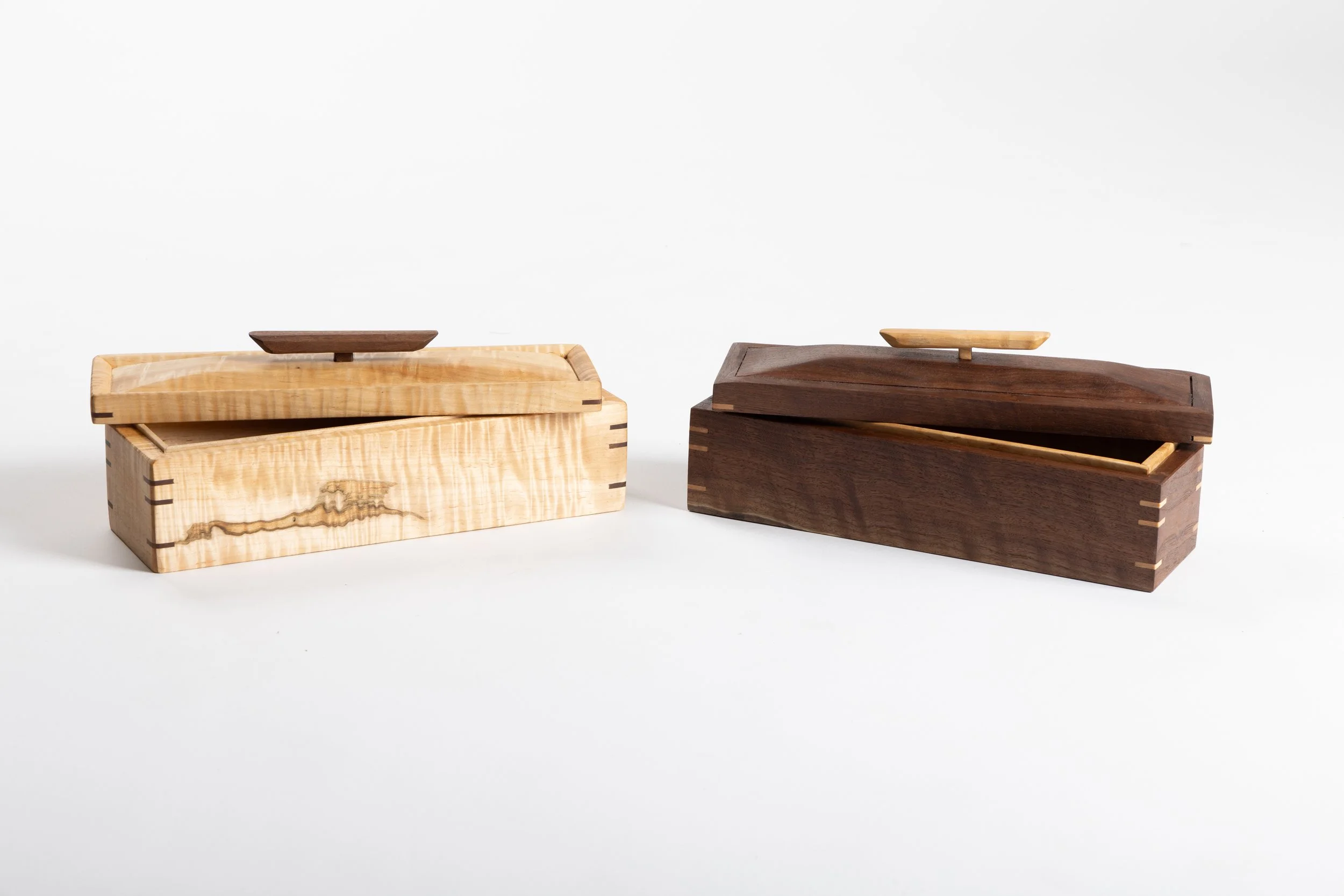
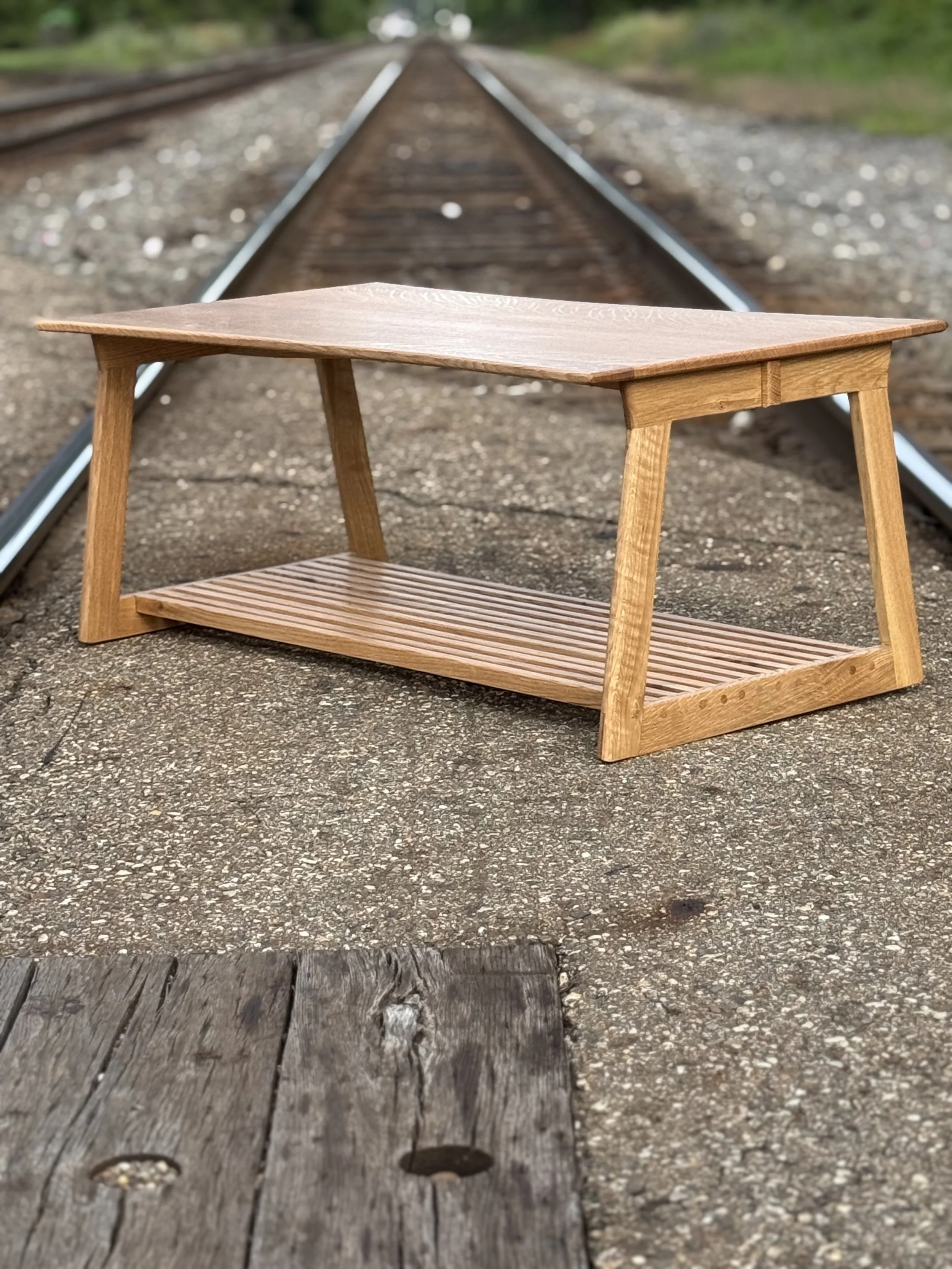
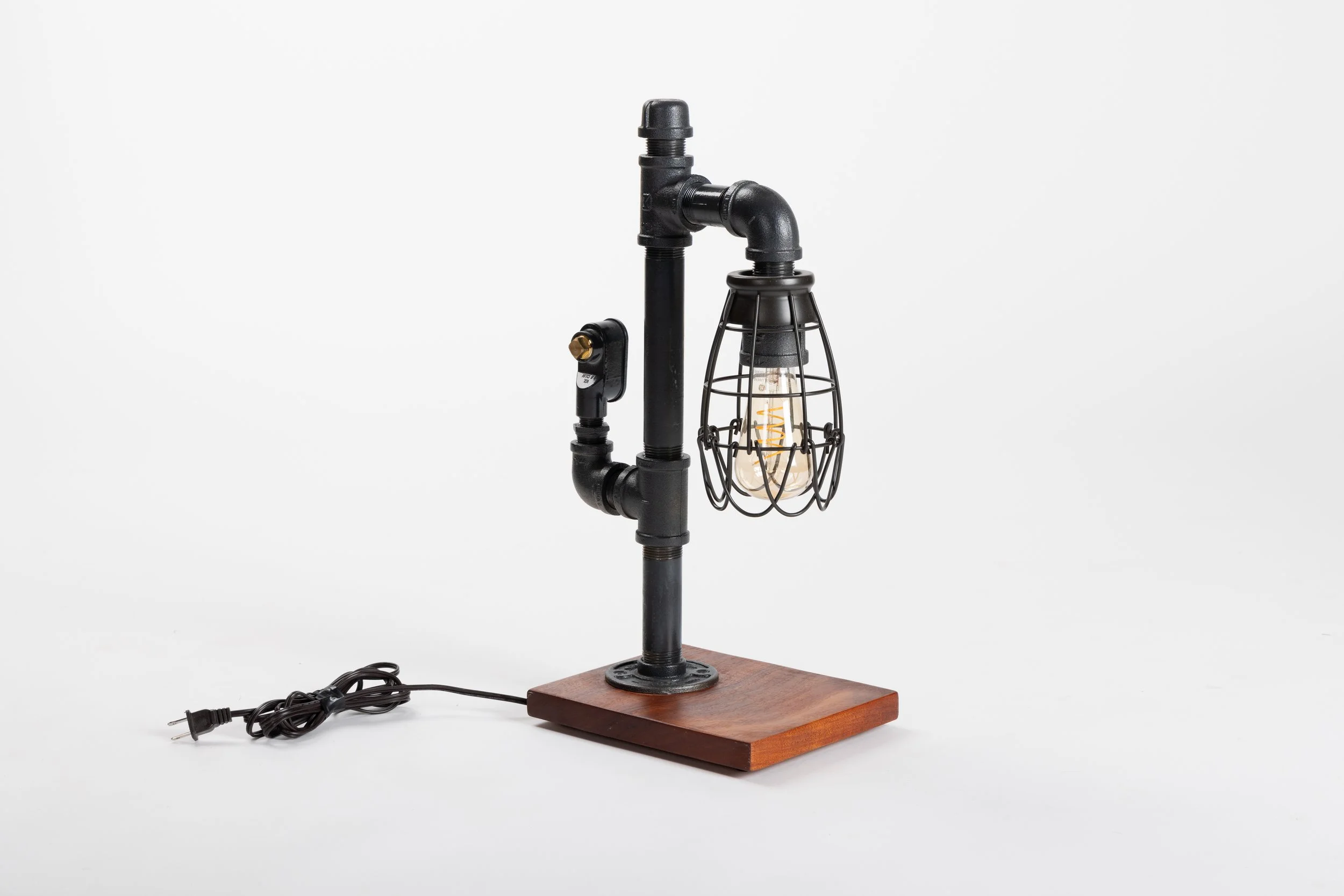
He also began taking on commissioned work and explored lamp-making for a time. “I did a dining room corner bench, a dog crate topper, that was cute, kind of fun,” he said. “Here and there with cutting boards and craft shows, just trying to get my name out there. I have a few clients. Right now, I have a client lined up who would like two hope chests made out of walnut from his family’s property, for his daughters.”
Turning His Focus to the Future
As Chase’s woodworking business went up and down, as early businesses do, he started asking the practical questions that come with building a life.
“I was really trying to get my business going that year, while also realizing I wanted to marry my girlfriend,” he said. “And I was sitting there thinking about it, and I realized there is no way I’m going to be able to afford the ring she deserves, and a house, without something more consistent. So I started looking for something that would add to my income.”
“I went online and looked for woodworking opportunities, and this job posting for a woodshop teacher came up,” he said. “I was looking at the description and it said you had to have a teaching degree. I thought, ‘Maybe I shouldn’t apply because I don’t have the degree.’ But stranger things have happened, so I threw the net.”
To his surprise, he was the needle in the haystack for the school district.
“They basically told me I’m the most qualified candidate they’ve had,” he said. “I went through the interview process, and now I’m working there on an emergency teacher certification.”
Chase will be returning to finish his bachelor’s degree, likely in forestry or construction. At the same time, he is continuing to build his business on the side at a pace that fits his new season of life.
“It’ll be a small side business, and I’m okay with that. Until maybe it takes off,” he said.
Looking ahead, Chase is excited to set up his barn as a woodwhop. “I’m going to get more into making chairs after the wedding.”
When asked what he would say to prospective woodworking students, his answer came easily: “You don’t know how much you’ll love it until you try it,” he said.
“And, it’s worth it.”
Thank you Chase, for sharing your story with us. Congratulations on a big start to 2026!