
Wood Works: Daniel Kraus Goes From Curious Hobbyist to Skilled Craftsman
Welcome to “Wood Works,” a new monthly series profiling SBWI Alumni who are working at the intersections of carpentry, fine art, mass timber, and more. Follow along on our website or sign up for our newsletter to never miss a story.
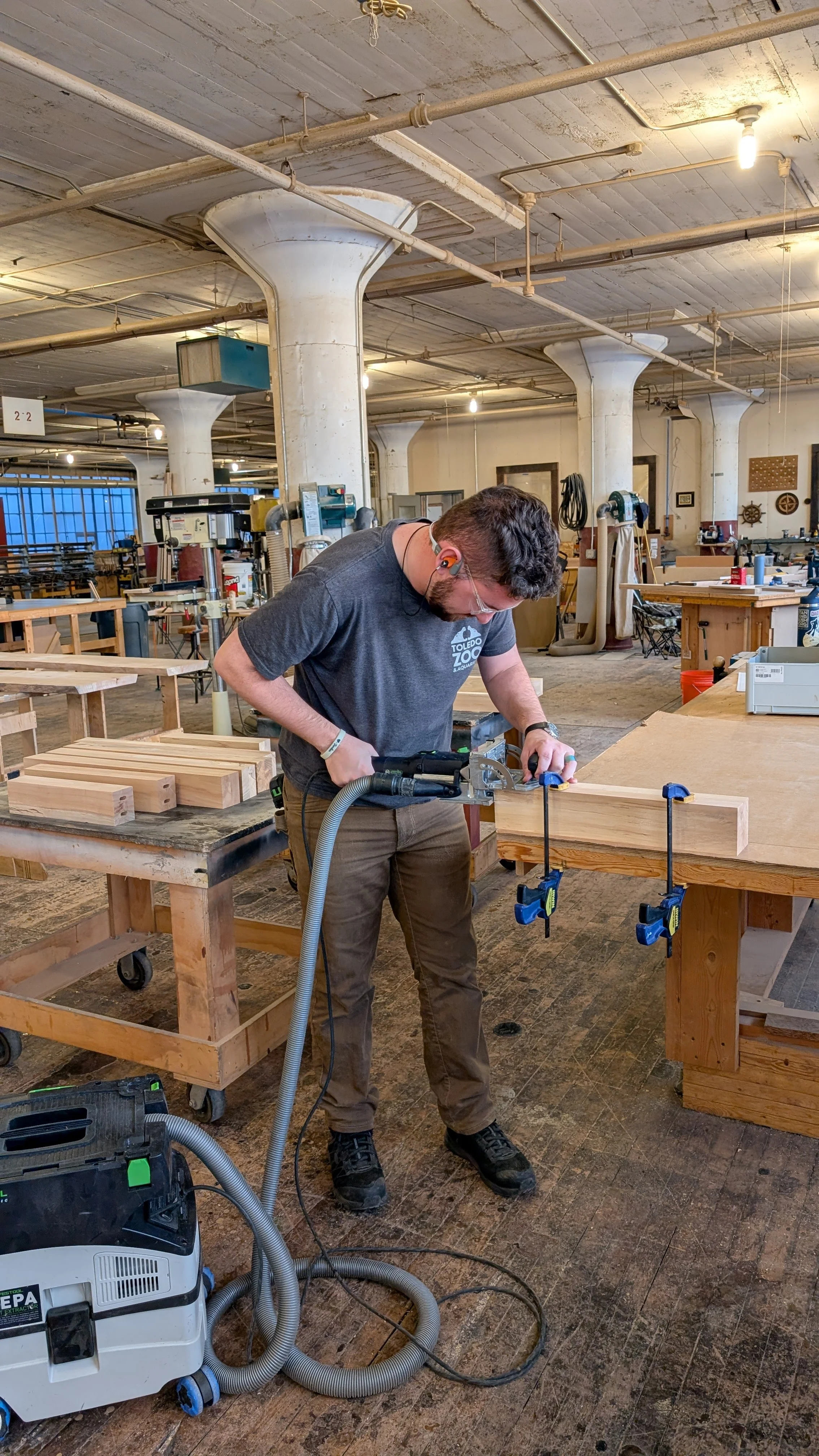
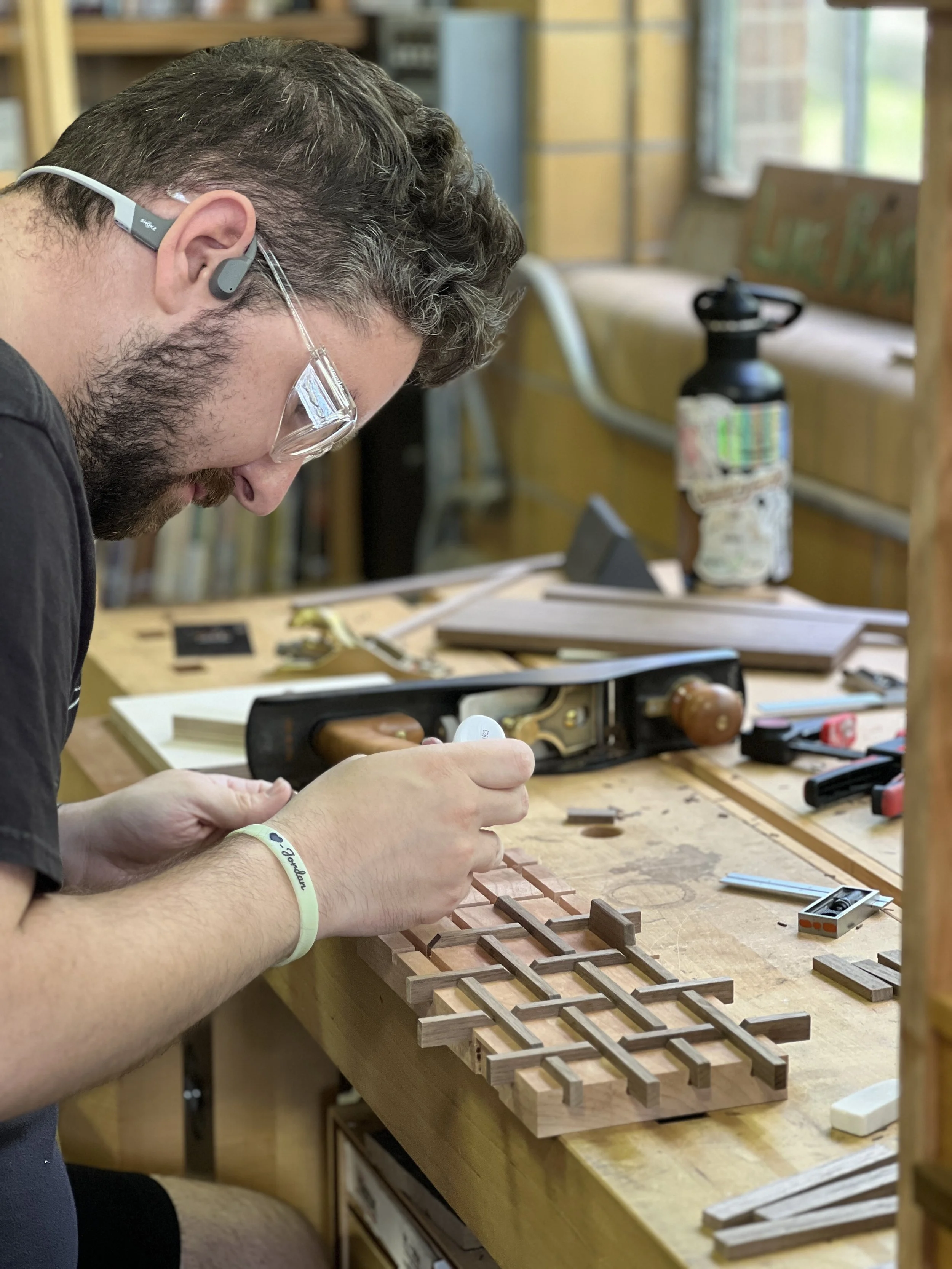
Daniel at work.
For many makers, the path to craft begins quietly as a small curiosity that, eventually, becomes impossible to ignore. For Daniel that curiosity has turned into a career shaped by exploration, education, and a growing respect for the material he now works with every day.
Daniel grew up in Toledo, Ohio and spent his twenties trying on different futures. He worked every summer at the Toledo Zoo’s adventure course and zipline (a job he held for 11 seasons) while testing academic paths in business and aviation. Traditional college “just wasn’t jiving with my brain,” he says, and over time it became clear that the moments he felt most at ease were the ones spent building, tinkering, or working with his hands.
At his mom’s encouragement, Daniel began searching for woodworking programs and discovered SBWI. He applied in September 2023, toured in December, and joined the Wood Design program at the start of 2024. SBWI’s structure immediately made sense to him.
“The project-based format was the biggest difference for me. A semester elsewhere is one long 15-week block of time. At SBWI, you work in these smaller pockets — three weeks or so — and each one builds on the last. That progression made my brain very happy. And it’s how I work now: We make something, and then we move on to the next project. The structure was a big advantage.”
Those focused blocks of learning combined with real shop time and instructor mentorship helped Daniel move from hobbyist to confident maker. He describes his first day as both nerve-wracking and clarifying: “I really hoped I would love it… and I did. I earnestly call it the best decision I’ve ever made.”
During the program, Daniel attended a presentation from Megan Barker, the President of Rustbelt. Her Cleveland-based fine furniture company is known for sustainable materials and heirloom-quality work. Daniel grabbed a business card, sent an email, and opened up the connection.
In March, Rustbelt invited students to tour the shop. Daniel’s sister lives in Cleveland, and between family ties and the company’s philosophy, the opportunity felt like a natural fit. There wasn’t an opening at Rustbelt right after graduation, so Daniel went back to his summer job at the Toledo Zoo. “It was a nice a consistency in my life,” he says. He checked in again in September, and the opportunity with Rustbelt was there. With a few months on a zipline to ease his transition, Daniel stepped from SBWI into a woodworking career.
Working at Rustbelt
Rustbelt is a woman-owned fine furniture company that embodies American-made excellence. On the shores of Lake Erie, skilled artisans meticulously craft sustainable furniture with pride. Their work blends traditional woodworking with contemporary design creating pieces made to be lived with, cared for, and passed down. They locally source materials, with most wood species harvested within 200 miles of their Cleveland shop.
From their website:
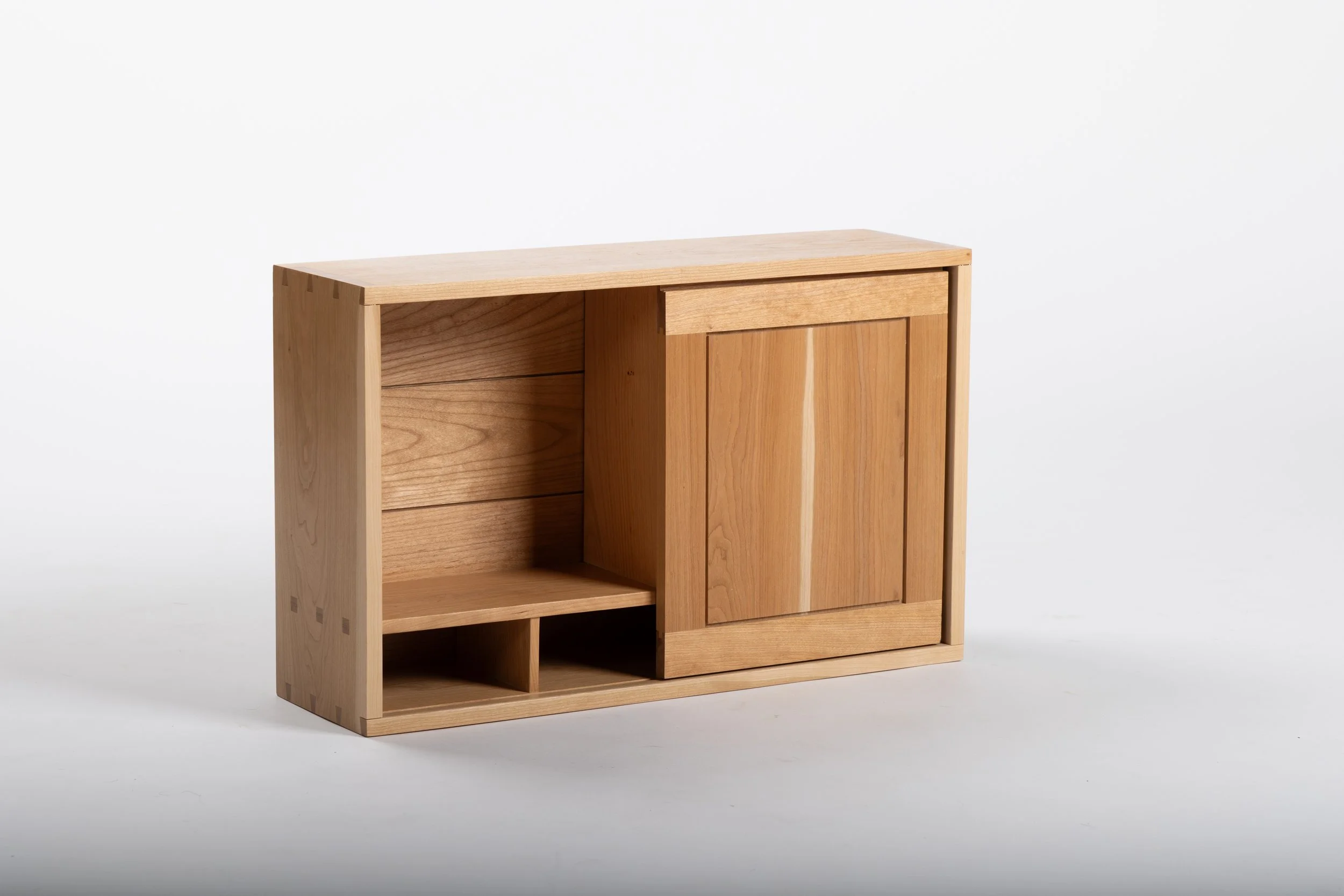
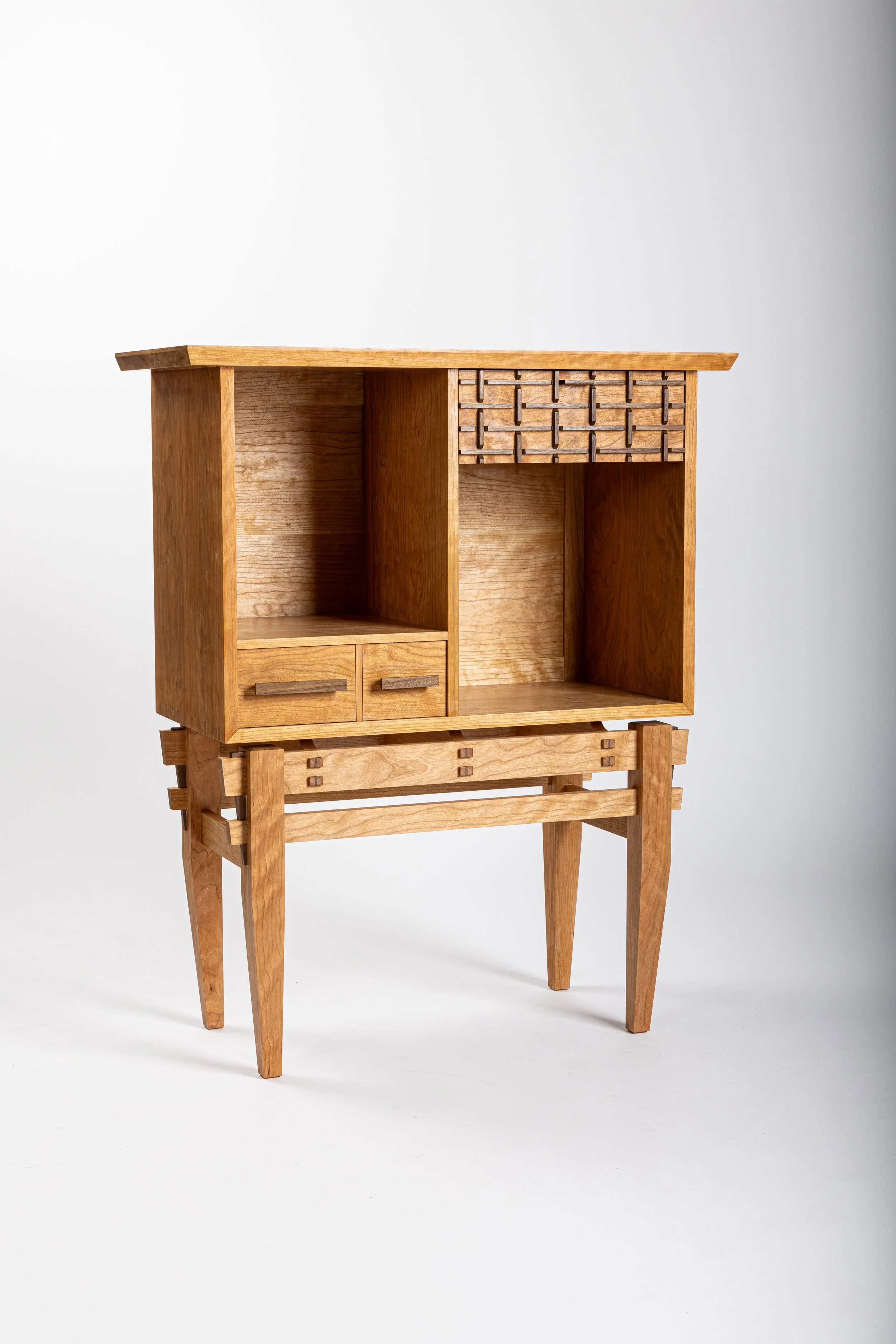
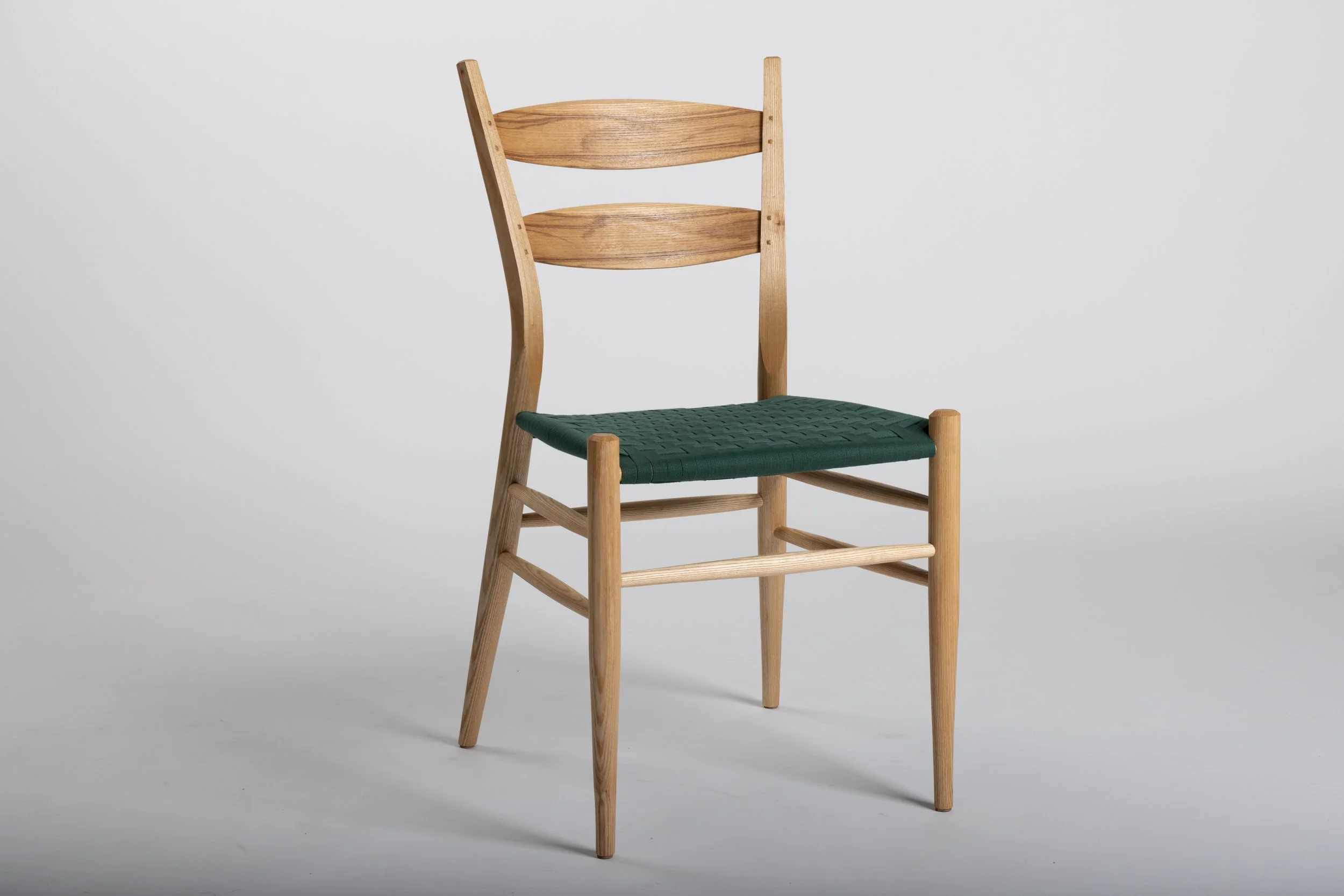
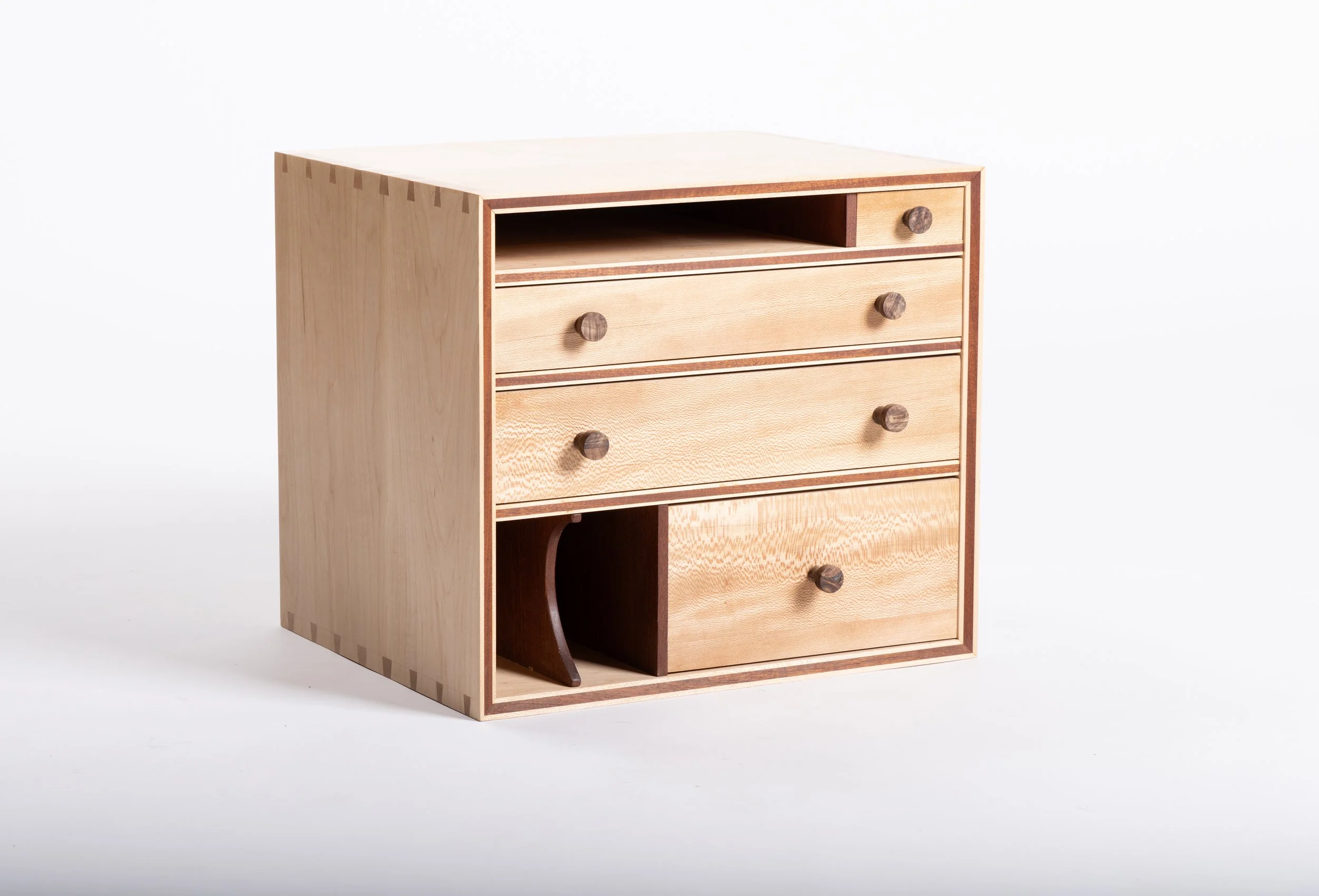
“We are more than a team, we are a group of friends who share a passion for furniture. The workshop around here does not clear out at closing time, we can be found around the shop, discussing projects and practices. Our free time is spent making furniture for our own homes, building props for schools, learning traditional timber framing or going to auctions in search of old tools and materials. We are made up of craftsman with undergrad and masters in the field, along with those taught traditionally by a master carpenter. We love what we do, and we like who we do it with.”
This environment is a great fit for Daniel, who’s graduation and artisan statement read, in part:
“I seek to create modern heirloom furniture that is functional and fashionable, using both traditional and modern woodworking techniques. I strongly believe in quality over convenience. I want to make furniture that serves a purpose and does so throughout, and beyond, my lifetime… Trees are one of the world’s great renewable resources, each with its own characteristics. Using natural materials to create functional and beautiful work is a privilege.”
At Rustblet Daniel can approach each workday as a chance to refine his skills while learning from both his own process and the craftspeople he works with. The artisan ethos of Rustbelt, and other employers who seek skilled woodworking graduates, aligns with a wider movement among makers who see wood not as a commodity, but as a natural resource that can be used to shape the built environment and elevate our lives through the objects that surround us. From a tinkering YouTube searcher to a professional craftsman, Daniel’s journey illustrates that pursuing a skilled woodworking diploma is a path to meaningful employment where students can carve their path to earn a living, and make a life.