
Wood Works: Med Student Designs Future in Furniture
Welcome to “Wood Works,” a new monthly series profiling SBWI Alumni who are working at the intersections of carpentry, fine art, mass timber, and more. Follow along on our website or sign up for our newsletter to never miss a story.
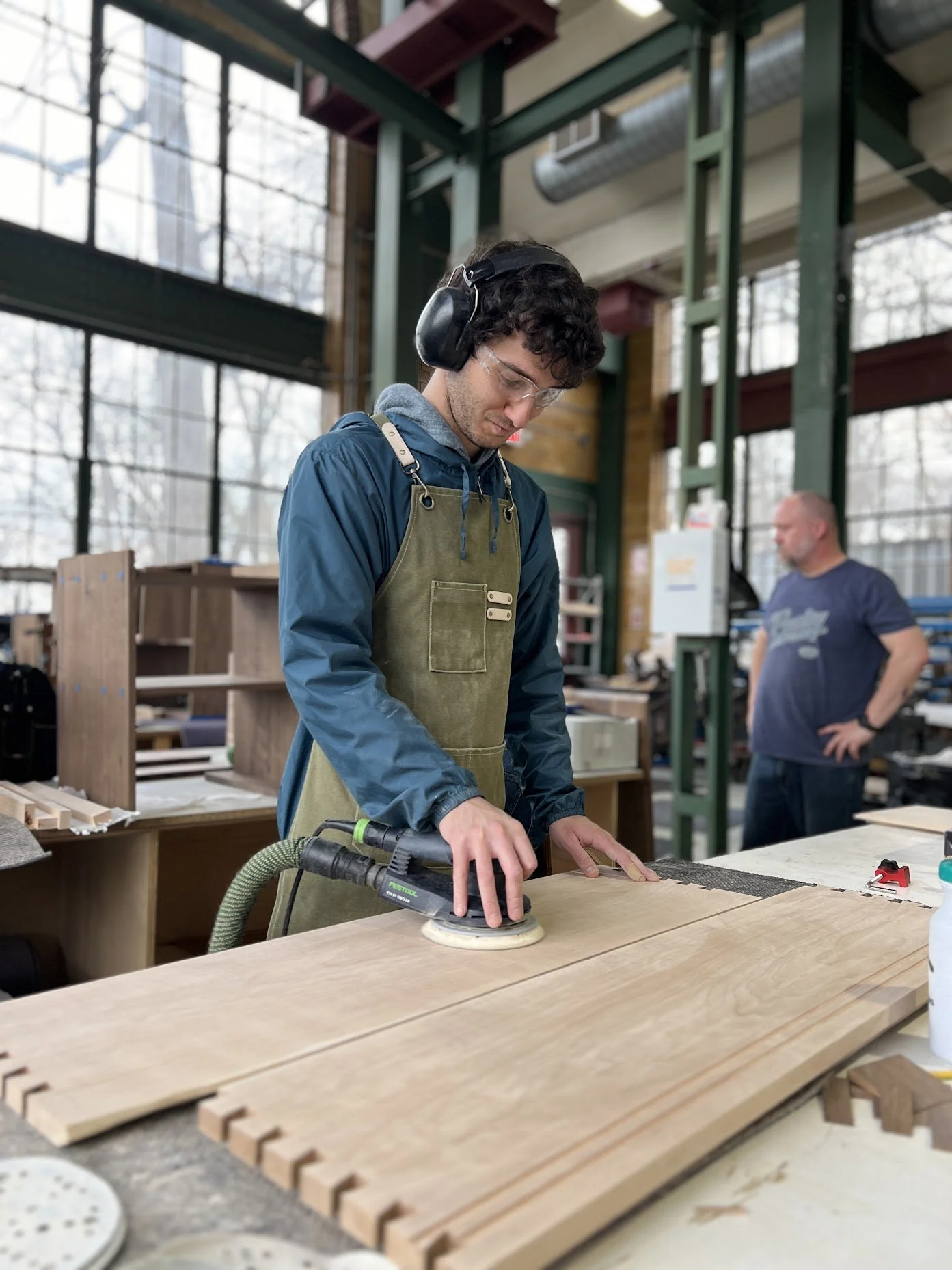
Rahme working on a case.
Rahme’s Realigned Career Path Leads to Herman Miller
After two years in medical school, Rahme Mourad was exhausted and unhappy. He’d worked hard to get to where he was, but the long bet just didn’t seem like it was going to pay off. “I didn’t think that, at the end of the road, it was ever going to be enjoyable,” he says.
He made the choice to leave school and enter a period of exploration, eventually starting to learn woodworking while discovering a path that aligned with his long term interests. While leaving college could have been a source of conflict and concern for some, his parents were supportive because they could see Rahme changing before their eyes. “They were happy for me,” he says, “because they saw where I was at mentally. I’m lucky that I got to start my career in their garage.”
During that period, Rahme found himself returning again and again to furniture and design. He had long been fascinated by interiors, well-made objects, and furniture books, even if he hadn’t yet named that interest as a potential career. “It was mostly just a fascination,” he explains. “Objects I was interacting with and living spaces.”
As Rahme explored woodworking more seriously, he came across the Sam Beauford Woodworking Institute. He describes the decision to apply not as a purely logical one, but as something more intuitive. “It just felt right,” he says, and conversations with SBWI staff reinforced that feeling.
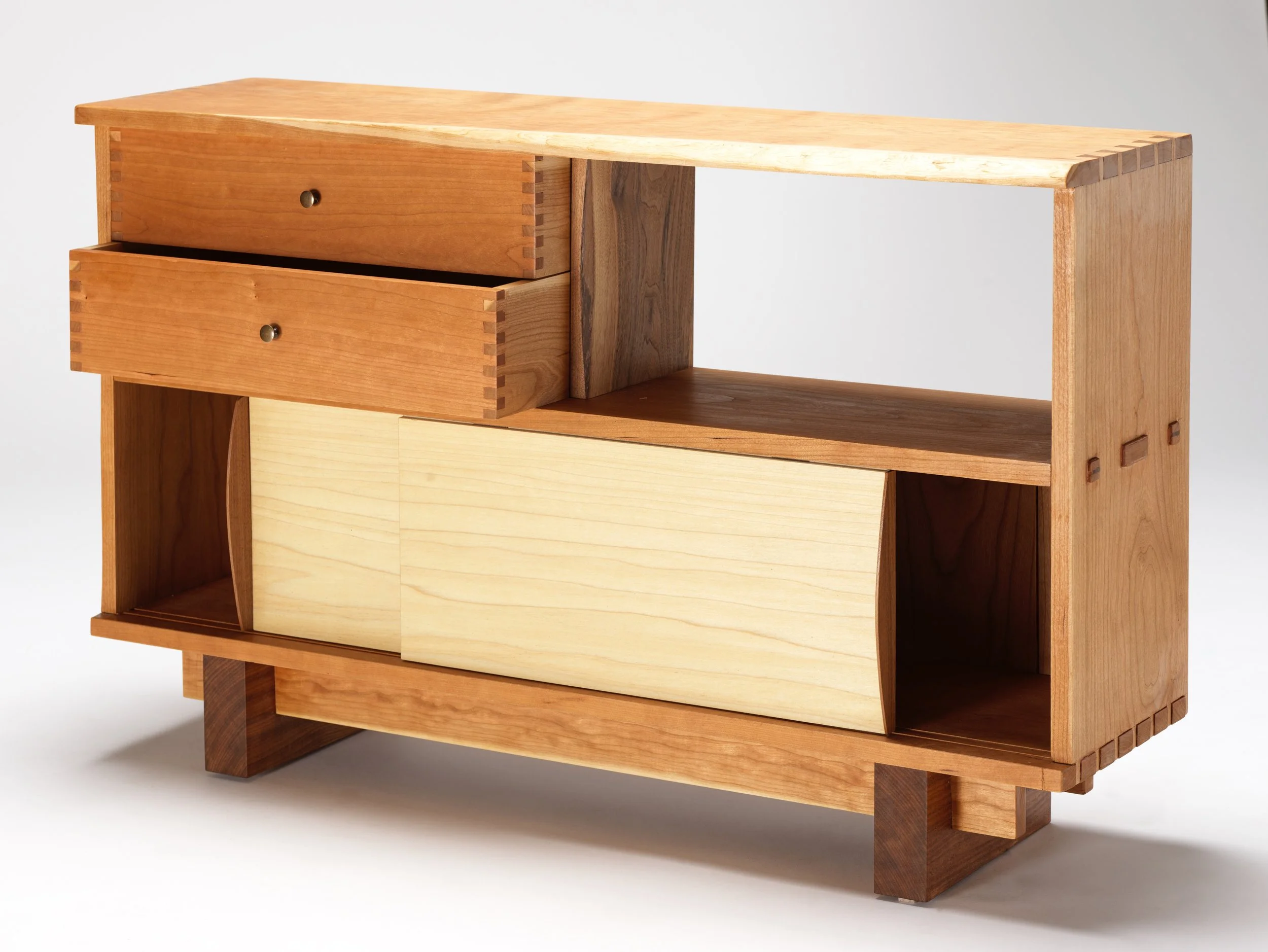
Once enrolled in the Wood Design Program, Rahme found an experience that surprised him in both depth and tone. He learned about furniture history and design traditions alongside hands-on training with tools and materials. The program also included business concepts and research-based learning. “It was a lot more than I expected,” he says.
What stood out most, though, was how the work felt. “It was actually surreal for me,” Rahme says, “because for the first time I was able to spend my time doing something that was actually enjoyable.” The program passed quickly (too quickly, in his view) but it marked an important turning point. “It was just a really beautiful chapter in my life.”
After Graduation, Work Begins
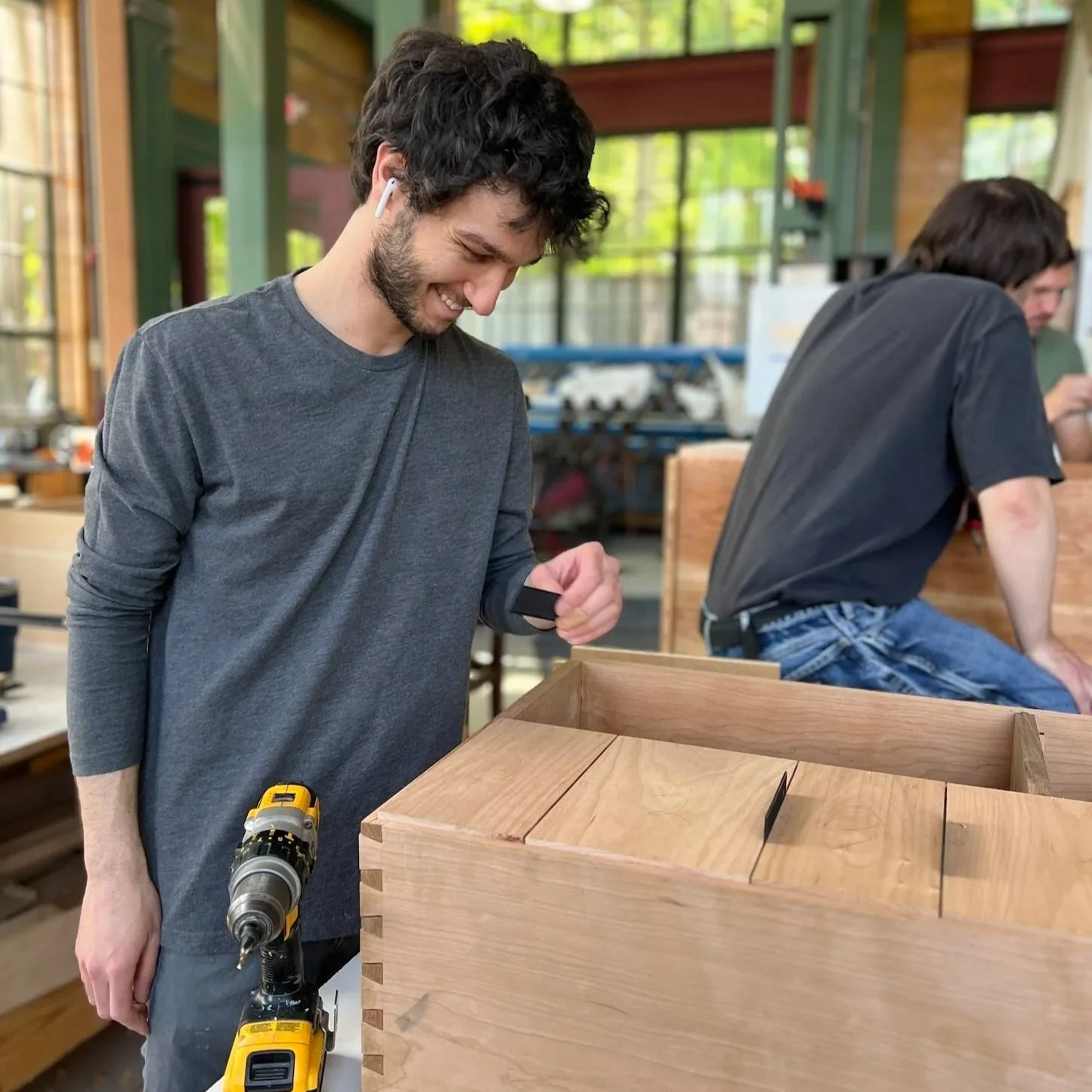
After graduating from SBWI, Rahme applied to a range of woodworking and furniture-related positions. Eventually, he accepted a role at Herman Miller, working in manufacturing inside the design-driven company with opportunities for growth. “There’s a career development program,” he explains, noting that it allows employees to explore different roles within the company.
Outside of work, Rahme continues to pursue his interest in fine furniture and joinery, particularly Japanese joinery, which first drew him to woodworking. He sees this balance, professional stability paired with personal craft, as a strong foundation for the future.
Rahme frames his career path as searching for the right alignment for the road head. His experience reflects what SBWI aims to provide students: rigorous training, exposure to design thinking, and a pathway forward for students who want to build meaningful, sustainable careers in the skilled trades.
When asked what he would share with someone considering a career in the trades, he says, “Taking a short-term course is useful for anybody who thinks they’re interested. I never had a woodshop in high school, so I think taking a class is a good way to see if it’s something you want to pursue.”
Thank you Rahme for sharing your story, and congratulations on joining Herman Miller!