
Should I try woodworking before applying to trade school?
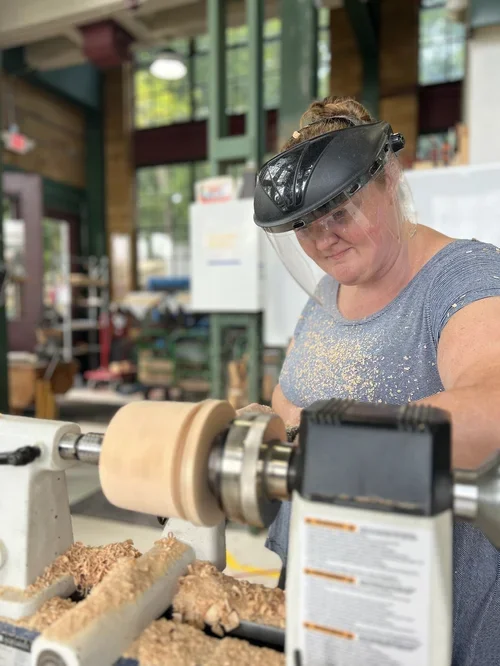
An SBWI short course student taking Intro to Woodturning
Should I try woodworking before applying to trade school?
SBWI accepts students without woodworking experience. If you’d like to get a feel for the craft first, you can take short classes or explore makerspaces and guilds.
To be clear, SBWI does not require you to have any woodworking experience. Still, if you are considering trade school, spending some time working in a shop can help you feel more confident in your goals by answering questions like:
Do I enjoy working with my hands for long periods of time?
Am I comfortable learning through repetition and correction?
Do I like problem-solving with physical materials rather than abstract ideas?
Is my passion heading towards wood, as opposed to other materials like welding or glass?
Can I see myself doing this every day?
Trying woodworking firsthand can clarify whether you enjoy the process, not just the finished object.
Who This Question Is For
Young people looking at credentials and career pathways
Career changers exploring hands-on work
People curious about woodworking as more than a hobby
How to Try Woodworking Before Trade School
Short-Term Woodworking Classes
Weekend or multi-day woodworking classes are one of the most accessible ways to try woodworking. These classes typically focus on a single project or skill and provide structured instruction in a supportive environment.
Short classes can help you:
Learn basic tool use and shop safety
Understand how woodworking instruction fits with your learning style
Get a feel for shop pace and expectations
SBWI offers many, many short courses every year, from weekend woodshop safety and cutting board classes to week-long intensives in intermediate and advanced woodworking. We would love for you to come to a short course if you are considering trade school. It is a great way to meet instructors, talk to current students, see our shop, and explore Adrian, Michigan.
Makerspaces and Community Shops
Makerspaces and community woodshops offer shared access to tools and equipment, often through a membership model. Most have woodshop equipment alongside other fabrication tools. Makerspaces typically offer basic woodshop instruction and a cutting board class. By becoming involved in a local makerspace you can explore what they have to offer, not just in terms of resources but the valuable community connections. Woodworking is a small world, and most are happy to share their knowledge and skills with beginners.
There are hundreds of makerspaces in the U.S. alone. There might be one closer to you than you think!
Woodworking Guilds and Clubs
Woodworking guilds are valuable community resources filled with people who are dedicated to the craft. Most clubs welcome beginners and hobbyists, and often there is a presentation at each meeting of a woodworking method or unique skill.
Some woodworking groups (especially in our little corner of the Midwest) skew older or more experienced, which can feel intimidating. Let’s face it, it’s always little awkward to be the new person in a space where everybody already knows each other.
If you’re on the fence about attending a local meeting, we recommend:
Reaching out ahead of time to ask about attending as a guest.
Bringing a friend with you.
Asking if there is a public event or open house, so you can be in the company of other newbies.
Guilds are a fantastic way to expand your network and learn from experienced makers. Most are happy to share their knowledge with the next generation, or with new people of any age. The love of craft is a powerful thing that brings all kinds of folks together.
Wood Club Hub has a list of woodworking clubs, and clubs often operate through Facebook Groups.
What These Experiences Can and Can’t Tell You
Trying woodworking before trade school can help you determine if you enjoy working in a shop environment, if you enjoy working with wood and the tools present in a woodworking shop, and whether sustained, hands-on learning feels satisfying.
Trying woodworking before applying to trade school can be especially helpful if you:
Are considering a major career change
Haven’t worked in a shop environment before
Want to understand physical demands and learning style
Need reassurance before committing time and resources
Recap
At SBWI, you can apply to our Wood Design program without experience in woodworking. But, if you’re looking for a step before that, taking a short course is a great way to get to know us.
You can also check out makerspaces and local woodworking guilds in your area. Our Wood Design program builds skills far beyond casual exposure and is designed prepare you for a career in the trades.
If you have any questions, reach out to our Vice President of Enrollment who can walk you through all the above, and more.