
The Esherick Connection: A Conversation With Incoming Board Member Eric Slosberg
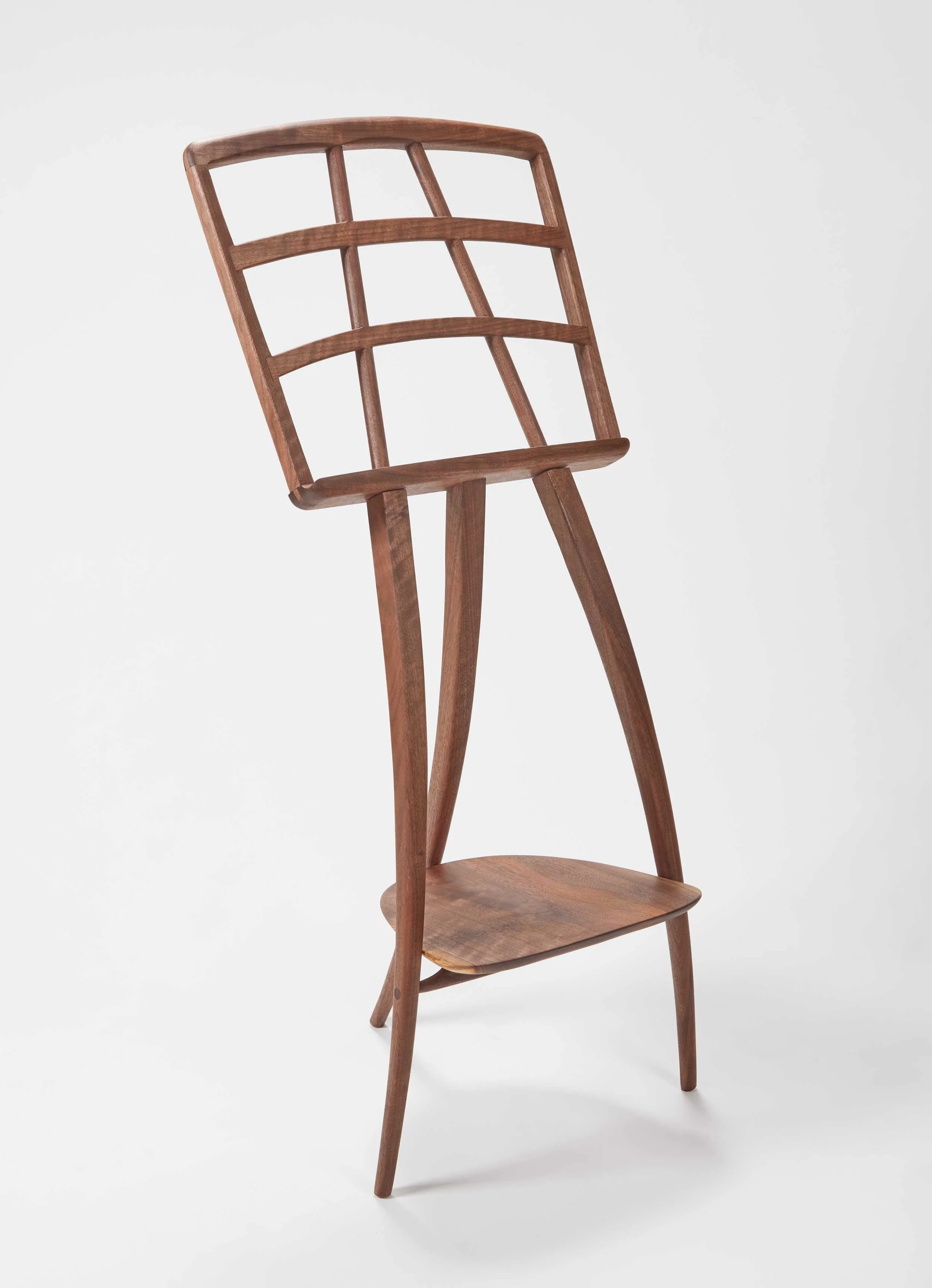
Luke Barnett’s interpretation of a Wharton Esherick music stand.
Eric Slosberg grew up around furniture production.
“My dad’s family were into textiles,” Eric says. “My father went to the Philadelphia Textile Institute, which is now part of Jefferson University in Philadelphia. He worked at a factory where his dad worked, and he realized that the only way to advance was to take his dad’s job. That wasn’t going to happen.”
Eric’s father was a hobby woodworker and went into the furniture business. Through a silent partner and investor, the business grew. “My mom’s story was that a man walked into my father’s factory and said, ‘How much will it cost to make a poudreuse? My dad made up a number, and the man said, ‘I’ll take ten.’”
The business expanded quickly. Eric’s father eventually operated three furniture factories, mass-producing furniture while designing the pieces. Eric spent time in those factories in Philadelphia, but he knew he wouldn’t continue in that work.
“It was more of a babysitting thing,” he says. “I’m a math and science guy. I knew I wanted to be a physician from an early age.”
Eric settled in Kalamazoo as a pediatrician, raised his children, and later in his career her took on board leadership roles with several community organizations, including the Boys & Girls Club, Visiting Nurses, and Hospice of Greater Kalamazoo. When he retired in 2014, he found himself drawn, unexpectedly, to woodworking.
“I started making things around the house,” he says. “I didn’t know what I was doing, but fortunately there was the internet. As I started making pieces of furniture, those genes that had been hidden all those years came popping out.”
A neighbor mentioned the Sam Beauford Woodworking Institute and the two signed up for a class together. “The classes with Luke are kept small, and we had a lot of his attention,” Eric says. “There was a lot of time for talking and working.”
During one of those conversations, Eric mentioned that his father had been friends with famed furniture maker Wharton Esherick. He shared the story of a proposed collaboration between his father, who believed in mass production, and Esherick, who was known for making one-of-a-kind pieces.
“Luke was running a class to make a Wharton Esherick music stand that year,” Eric recalls. “I saw the picture in the catalog, and I mentioned to Luke that that was the piece they were trying to mass-produce. The story was that it never came to fruition because Esherick was never happy with the mass-produced version.”
Not so, it turned out.
“Luke left and came back with a bill of sale for 25 of the 50 music stands,” Eric says. “Up until 2025, I had no idea that these were ever made and sold. My mother had one in her garage for a long time. One of the kids hit it with a car and broke it, and she threw it away.”
While Eric was taking that class, Luke testified before the state legislature to get support for the new SBWI campus. He recorded the presentation, later showing it at lunchtime to the Wood Design and short-term students.
“It was a very effective presentation,” Eric says. “And he did get the money.”
Around that time, Luke asked Eric if he would consider serving on the board.
“I told him I was willing, but that I needed to talk with my wife,” Eric says. “I have strong feelings that board service requires a strong commitment, and that includes a financial component. You get asked, ‘What percentage of the board is participating?’ You give what you can, but it’s the participation that matters . If you can say 100% percent of the board is committed, that goes a lot better. I talked with my wife, and we agreed.”
While Eric’s woodworking genes may have skipped a generation in his adult children, his grandchildren spend plenty of time with him in the shop.
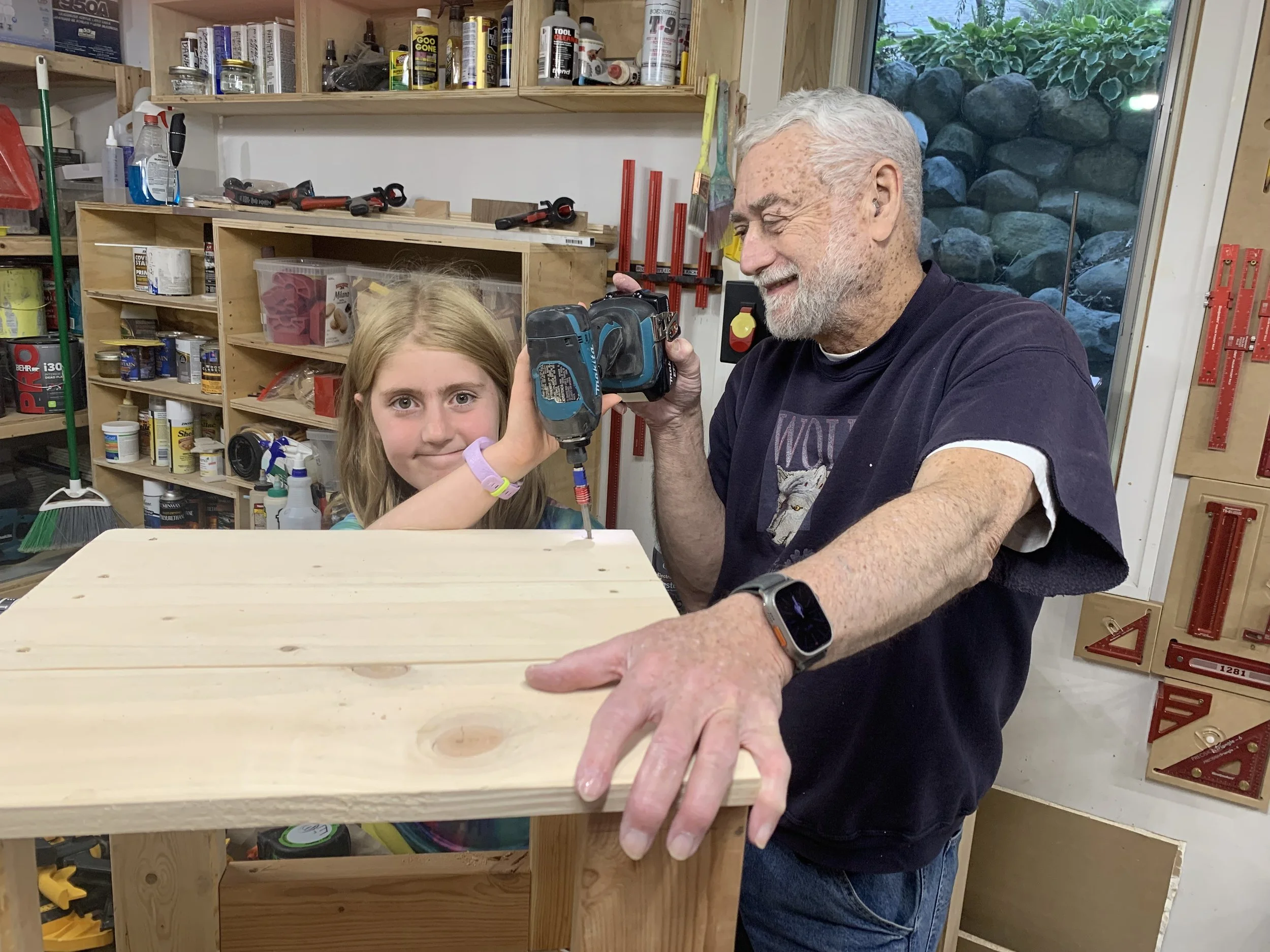
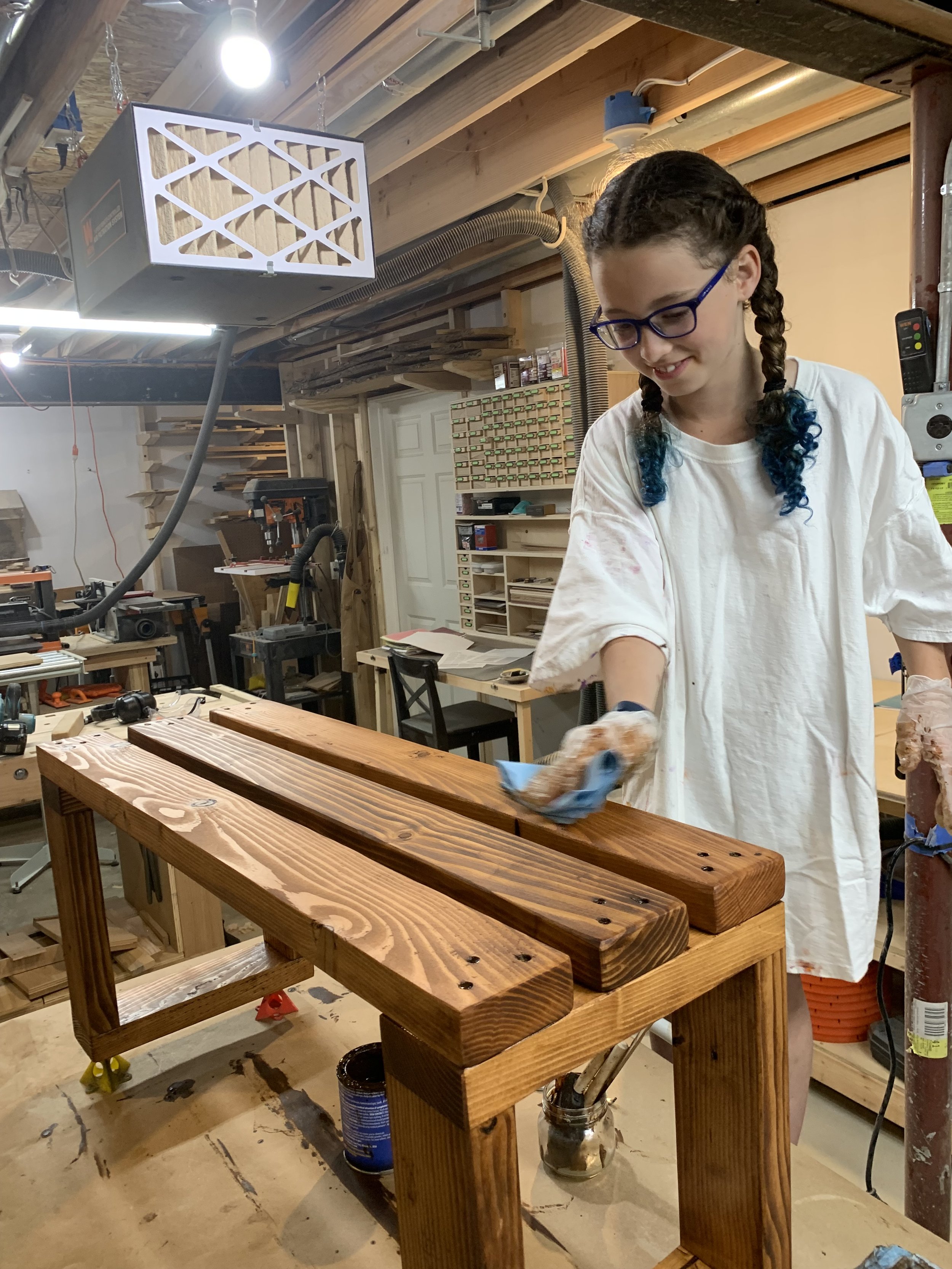
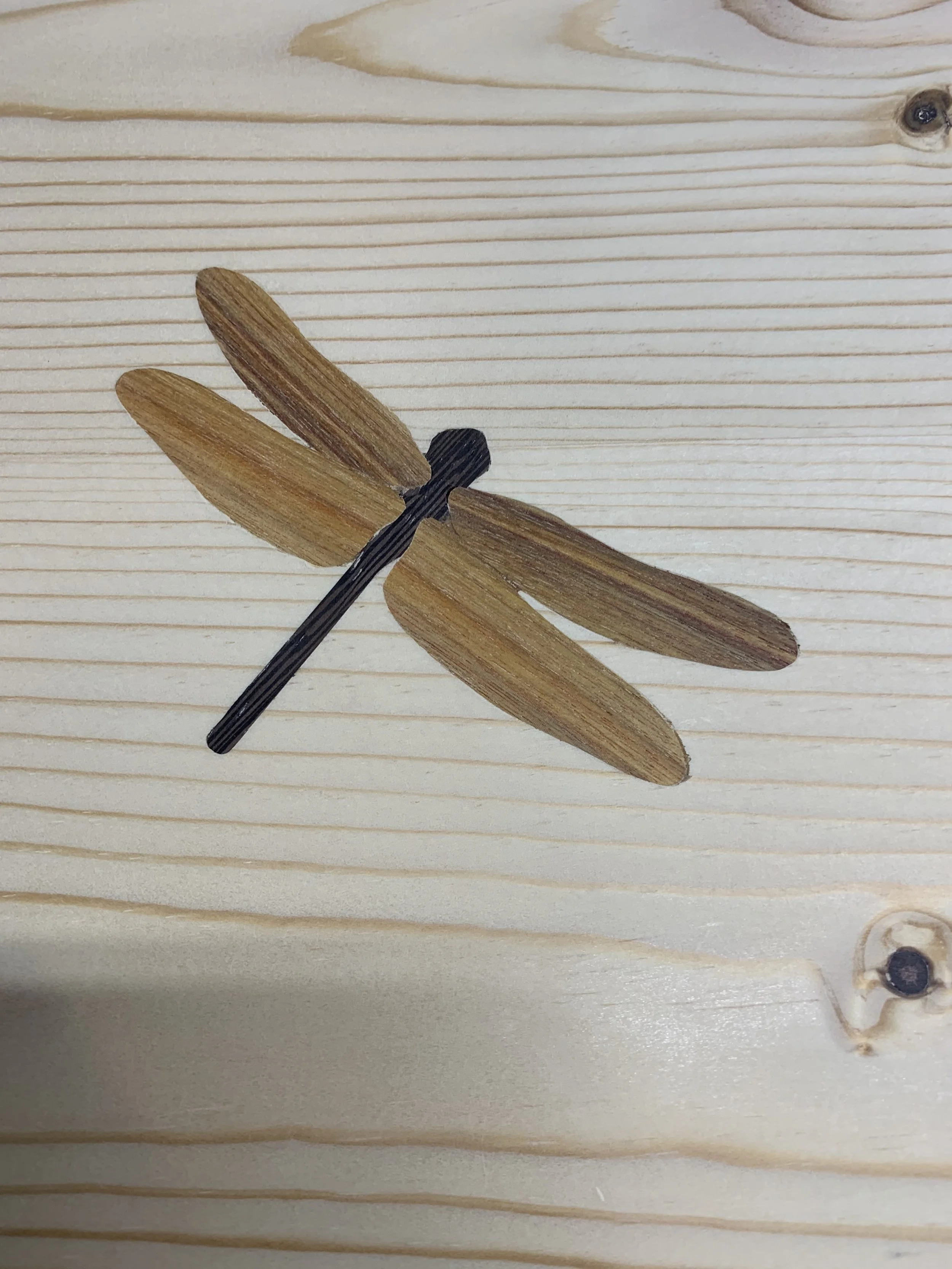
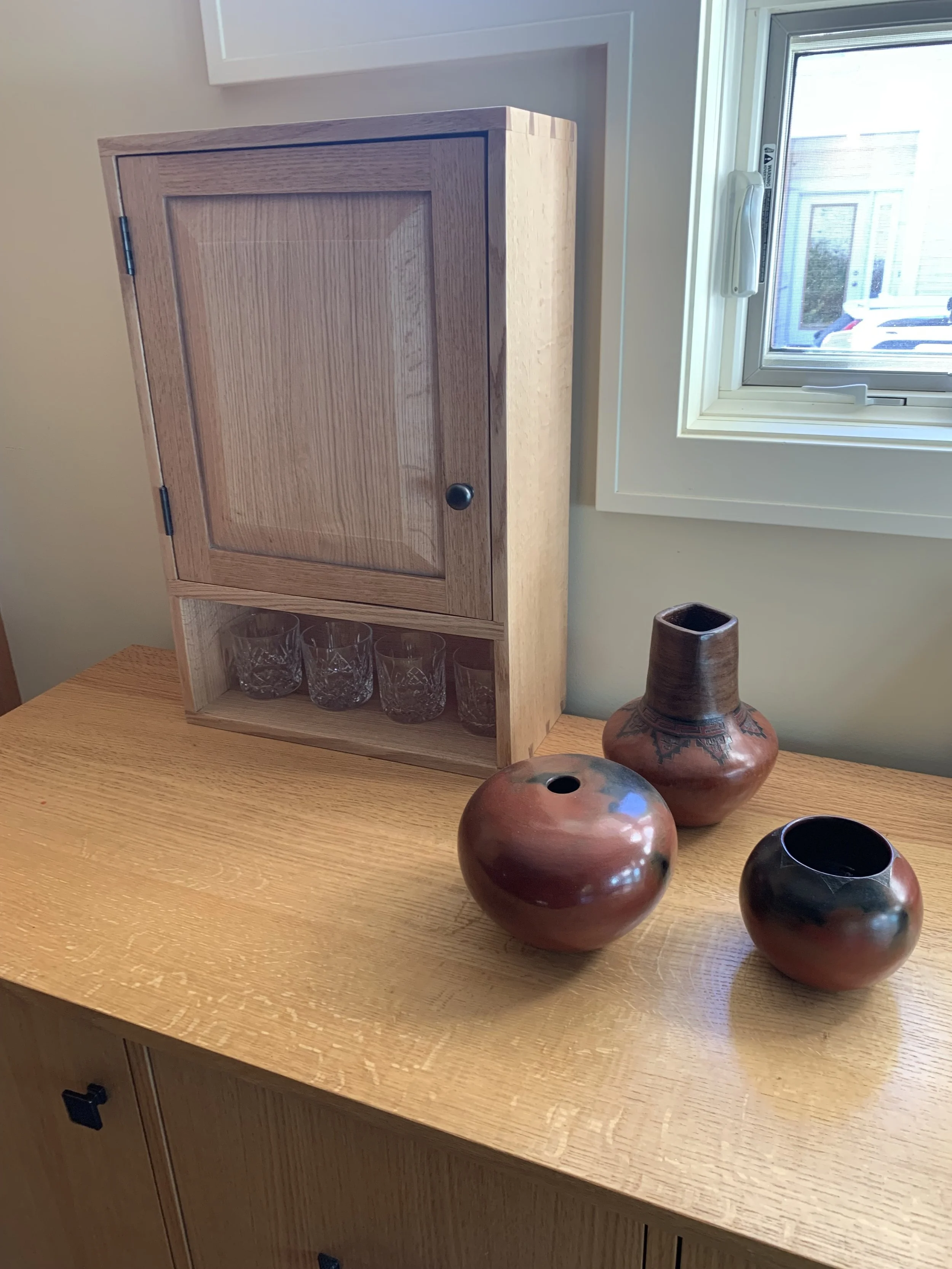
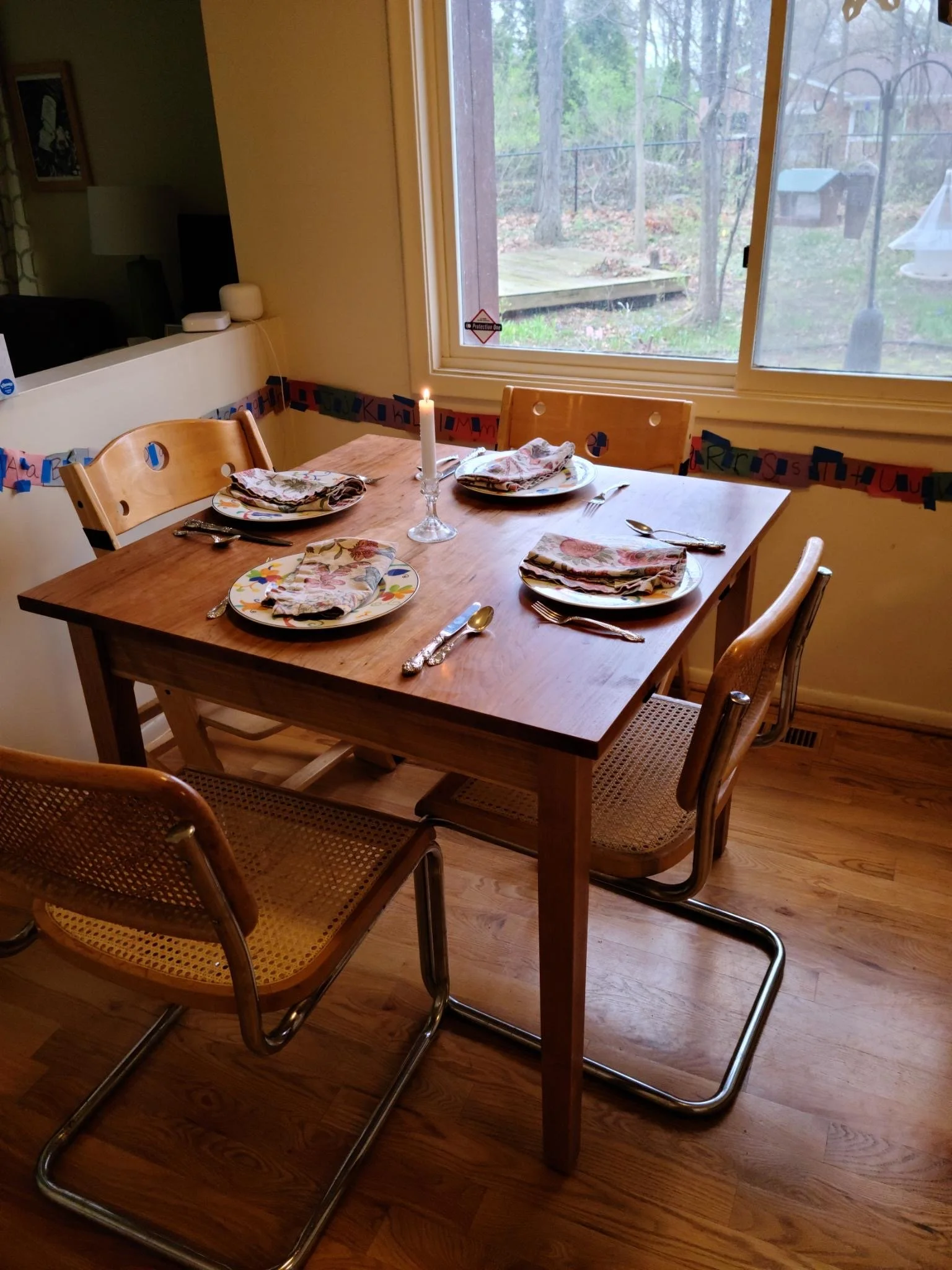
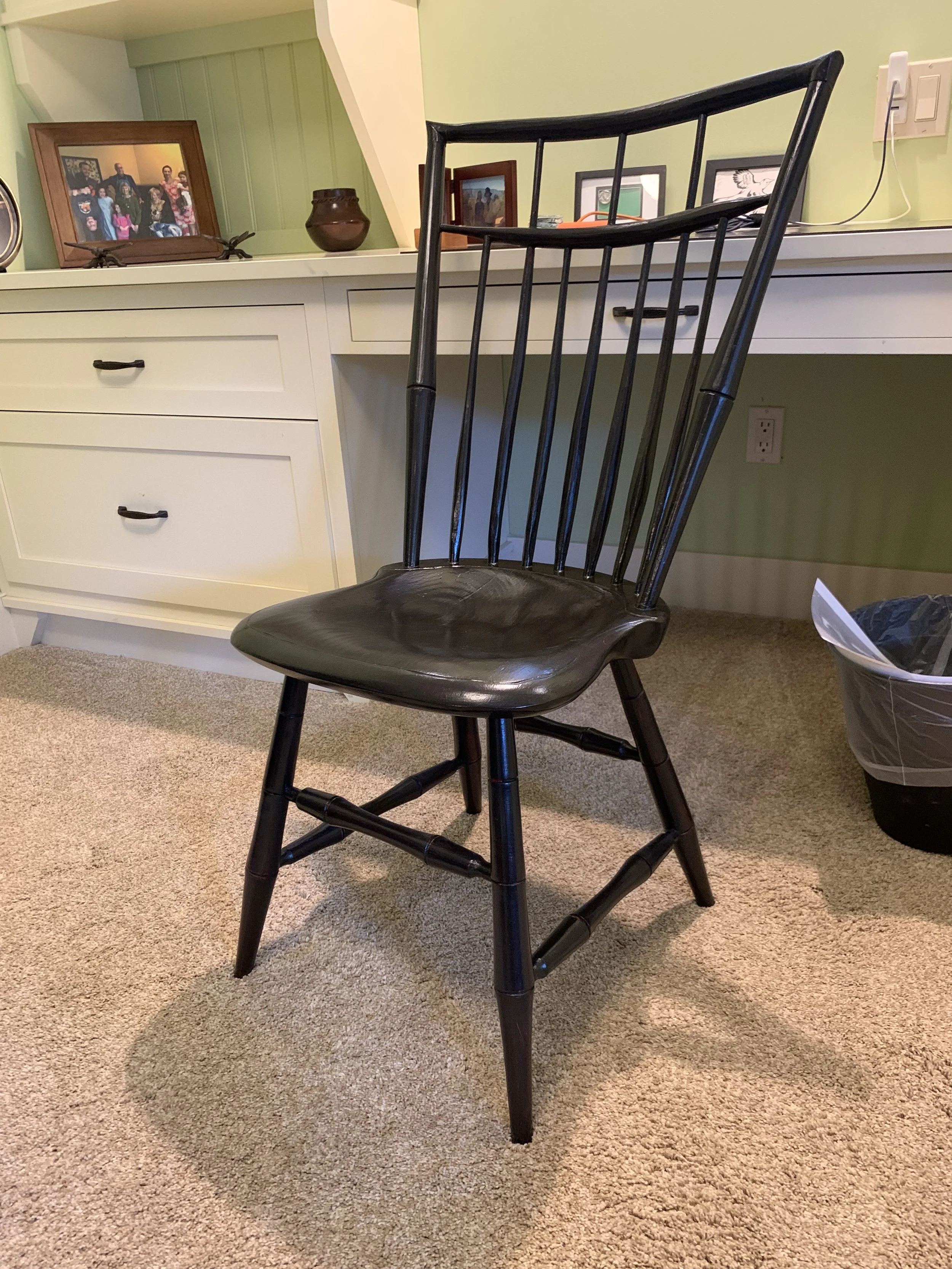
“My daughter found these three properties in Ann Arbor,” he says. “My son was living in Hong Kong, but they moved back to Ann Arbor. My other daughter has two kids and lives two blocks over. We’re all together now. When my wife makes Sunday dinner it’s for sixteen people.”
Eric describes himself as an average-to-advanced hobbyist.
“I try hard not to build the same thing twice, and I want to build something that’s going to teach me something,” he says. “I built a desk for my granddaughter, and after looking at multiple plans for her sister she ended up saying, ‘I want a desk just like hers.’ So I decided to build it a different way.”
He ordered plans online, then reconsidered.
“I couldn’t believe how terrible they were,” Eric says. “They had all these errors and were so hard to follow. That made me want to design my own plans, and I thought, ‘I can’t believe I’m saying that, my dad was a furniture designer.’” Eric has since been taking furniture drawing lessons in Ann Arbor.
Looking ahead to his tenure on the board, Eric is excited about the future of the school.
“They really have outgrown the space,” he says. “The board is going to be consumed with this building for the next couple of years. And then, once the building is built, expanding the educational portion to fill it, that’s what I’ll be focused on.”
Welcome to the board, Eric! We are thankful to have found you, we’re grateful for your story, and we are looking forward to your incoming tenure of service.