
What If I Have No Woodworking Experience? Can I Still Go to Trade School?
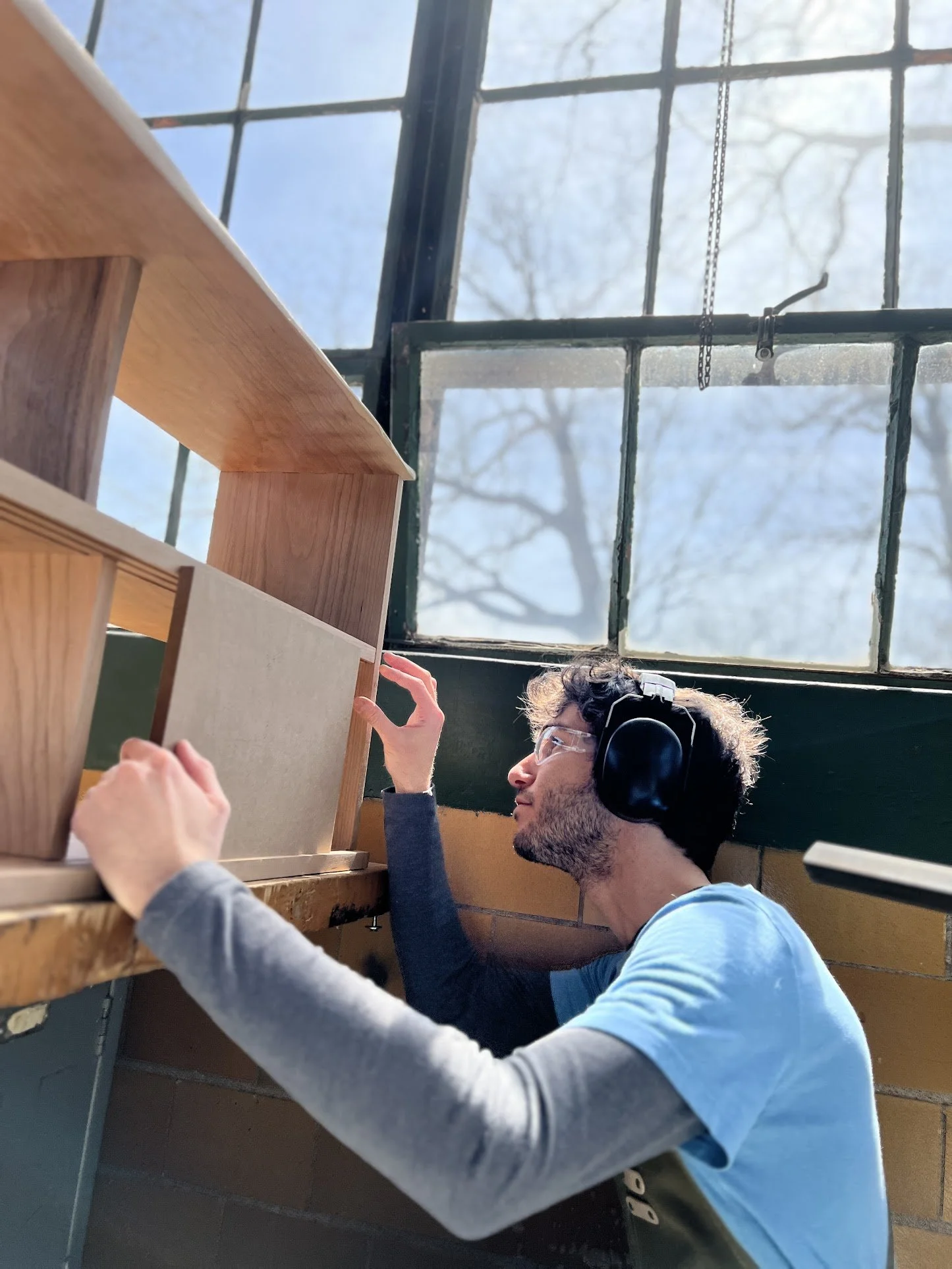
SBWI Wood Design student building in the shop
What If I Have No Woodworking Experience? Can I Still Go to Trade School?
Yes. That’s Exactly Who Trade School Is For.
You don’t need a background in woodworking to attend SBWI.
In fact, many students arrive with little or no prior experience. Our curriculum is built to teach from the ground up, starting with the fundamentals and progressing through real, hands-on work in the shop.
We don’t expect you to show up as a polished craftsperson, but as someone who would like to make a living in the trades. You’re expected to show up curious, committed, and ready to work with your hands. The skills come through practice.
What matters most isn’t what you already know, it’s your willingness to learn, make mistakes, and keep going.
Who Succeeds at SBWI?
Successful program applicants to our year-long Wood Design program are often:
Young people starting out in their education
Sometimes they have already graduated from college. Or they started college, but for one reason or another, it wasn’t the right fit.
High School Graduates
Although it is less common, we may accept students right out of high school who are passionate, and interested in becoming a professional artisan.
Adults ready for a career change
Many of our students already have a decade or more of career experience in professional fields from engineering to culinary arts.
Veterans transitioning from military service to civilian careers
Because our Wood Design program is eligible for the GI bill and VR&E, veterans have found SBWI to be a welcoming environment to build community and career skills after serving our country. We are proud to be recognized as a Gold Level Veteran-Friendly School.
People who enjoy making things but lack formal training
Hobbyists wondering if they’re “serious enough” to pursue the trade
If you’ve ever thought “I think I would like woodworking, but I’m not sure I belong in a trade school,” you’re not alone, and you might be exactly the kind of student our program was designed for!
How Woodworking Trade School Teaches Beginners
Trade school is very different from learning on your own or watching online videos. Instead of guessing your way through projects, instruction is intentional and layered, with each skill building on the last.
Students begin with:
Shop safety and responsible tool use
Understanding wood as a living material
Measuring, layout, and working to tolerance
Foundational joinery and hand skills
From day one, learning happens at the bench, not behind a screen. You’re guided by instructors who have spent decades working in the trade and know how to teach skills in a way that sticks. No prior knowledge is assumed and everything is taught with care, repetition, and context.
Common Concerns About Starting With No Experience
“Will I slow the class down if I’m new?”
No. We accept 24 students per year, and the group is split into a cohort of 12 and 12. Most cohorts include a wide range of backgrounds and instruction is designed to bring everyone along together, while meeting students where they are.
“Do I need to know how to use power tools already?”
Not at all. Safe, effective tool use is introduced early and reinforced throughout the program. Learning how to work safely is part of becoming a professional.
“Is trade school only for people who grew up woodworking/plumbing/doing construction/building things/living on a farm?”
No. Many professional woodworkers discover the trade later in life, often after realizing they want work that feels tangible and rooted in an appreciation of the natural world.
What the Reality Looks Like Inside a Woodworking Trade School
The first days and weeks are less about producing perfect objects and more about learning how to work in a shop. You’ll learn how to measure accurately, correct mistakes, sharpen tools, and develop patience and consistency.
Trade school emphasizes repetition, instructor feedback, and steady improvement over time. Craft is learned through doing, not instant mastery. With 12 hours of class instruction and a minimum of 12 hours in the shop each week, you will learn and improve quickly. The more time you give during the 40-week program, the more progress you will make.
When Trade School Might Be a Good Fit for You
Woodworking trade school may be a strong fit if you:
Learn best by doing
Enjoy solving practical, real-world problems on a per-project basis
Want a skill-based education with tangible outcomes
Are motivated to practice and improve over time
Are interested in the history and traditions of design
Many students are drawn to trade school because they want more than a credential, they want a path toward meaningful work. We say, “Earn a living, make a life.” If that makes sense to you, you could be a great fit for SBWI.
When It Might Not Be the Right Fit
Trade school may not be ideal if you:
Prefer academic writing and theoretical learning
Are uncomfortable making mistakes in front of others
Expect immediate mastery without repetition or practice
Craft rewards patience. If the process itself doesn’t appeal to you, the environment may feel challenging.
Ways to Explore Woodworking
Many people start small before enrolling in a full program. Helpful entry points include:
Short-term woodworking classes (we offer these!)
Woodcarving kits and Youtube tutorials
Getting involved in a community makerspace
These experiences can help you decide whether hands-on making and shop-based learning are something you want to pursue.
Are You Ready to Apply?
If you’ve made it this far, hey! That’s cool. There is no fee to apply to our program, and come for a tour to learn even more about whether this program is right for you. Only you can decide if a hands-on, craft-centered education aligns with your goals. For many students, it’s less about where you start and more about the path you’re ready to carve.